Is FPV drone racing safe for kids?
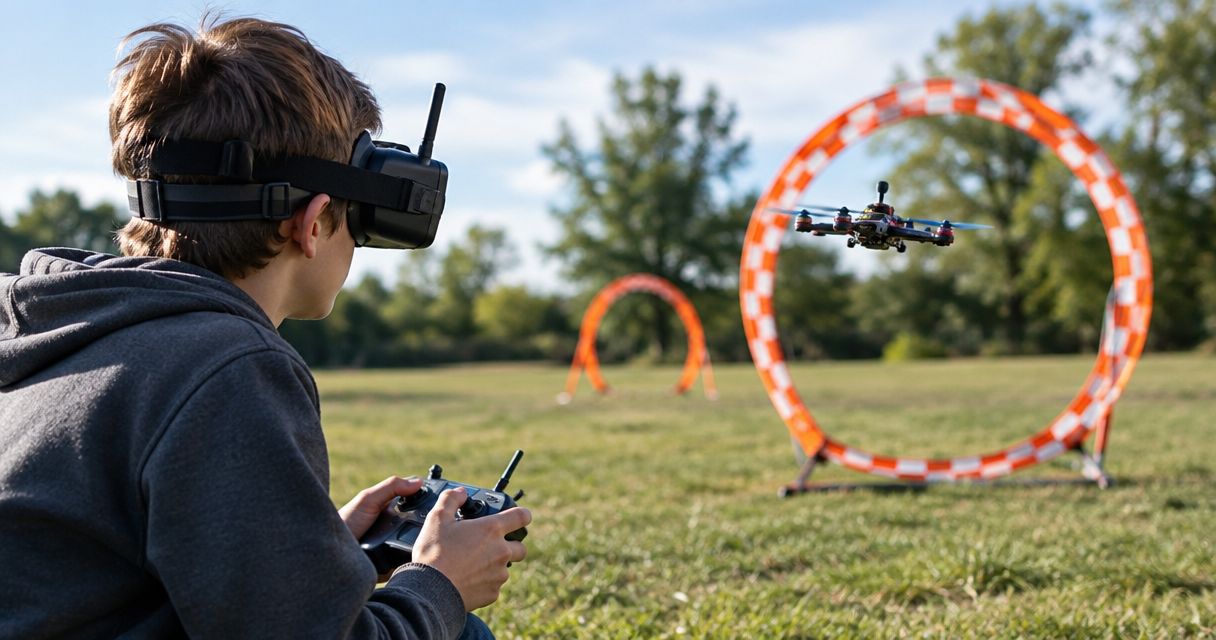
Micro-FPV drone racing is a reasonably safe hobby for kids in 2026 when three conditions hold: the drone is a ducted Tiny Whoop-style quad, not an open-prop racer; an adult handles or supervises battery charging; and the kid starts on a simulator before flying anything real. The risk most parents miss isn't the crash. It's the lithium-polymer (LiPo) battery, which needs careful charging and storage no matter how small the drone is.
TL;DR
- Is FPV drone racing safe for kids? Yes, with ducted micro-FPV quads, supervised charging, and simulator practice first.
- Ducted propeller guards on Tiny Whoop-class quads are the biggest safety difference from open-prop racing drones.
- LiPo battery handling, not crashing, is the hazard parents need to manage in 2026.
- Full-size 5-inch open-prop racers are a later step, not a first drone for any kid.
- SquadFlight is building a beginner-friendly indoor micro-FPV gym in Las Vegas around this progression.
Why this matters
FPV stands for first-person view. Instead of watching the drone from the ground, the pilot wears goggles showing a live feed from a camera on the drone. It feels like playing a racing game from the cockpit, which is exactly why kids want to try it and why parents ask about safety first.
The honest answer depends on which corner of the hobby you mean. A kid flying a tiny ducted quad through LED gates in an indoor room has a completely different risk profile from a teenager ripping a 5-inch open-prop racer around a park. Lumping them together is how most bad advice about FPV gets written.
If you want the full map of the hobby before deciding where a young pilot fits, the FPV drone racing for beginners guide covers gear classes, flight modes, and how people progress.
Is FPV drone racing safe for kids?
Yes, when the gear and setting match the pilot. The table below compares the three common entry points on the factors that decide safety.
Entry point Propeller exposure What a crash looks like Adult involvement Best for
Simulator None, it's virtual A reset button Low Every first-time pilot
Micro-FPV / Tiny Whoop (ducted) Blades enclosed in guards A light bump and a dropped quad Moderate, mainly charging Kids with sim practice
Full-size 5-inch racer (open prop) Blades fully exposed Real injury risk from spinning props High Experienced teen and adult pilots
The jump from row two to row three is the whole safety conversation. Tiny Whoop-style quads use ducted propellers specifically so an enclosed blade bumps on contact instead of cutting. Open-prop racers, the drones you see diving through forests and off buildings in highlight videos, have no such guard.
“Tiny Whoop-style quads use ducted propellers specifically so an enclosed blade bumps on contact instead of cutting.”
Bottom line: the gear class decides the risk. Pick ducted micro-FPV for kids, and the hobby sits closer to RC cars than to anything extreme.
Simulator: the zero-risk starting point
A flight simulator runs on a regular computer with a radio controller or gamepad plugged in. No battery, no propellers, no crash consequence. Kids learn throttle control, orientation, and stick coordination, and those skills transfer directly to a real quad.
Here's the part that surprises newcomers: real FPV drones in Acro mode (full manual control with no self-leveling) don't hover on their own. Let go of the throttle and the drone drops. Simulator time is how pilots build the muscle memory to handle that before it costs a broken frame. The FPV drone simulators for beginners roundup breaks down which ones work for first-timers.
-
Pros: zero physical risk, cheap to start, instantly shows whether a kid actually likes FPV
-
Cons: no real-world feel for wind, battery sag, or goggles, so it can't be the only step
Verdict: Start here. Every kid, every age, every skill level.
Micro-FPV (Tiny Whoop): the next safety tier
Once a kid is comfortable in the sim, a ducted micro-FPV quad is the standard next step. Tiny Whoops are small and light, fly well indoors at modest speeds, and their duct guards turn most crashes into a tap on the wall. Many run on single-cell (1S) LiPo batteries, which carry far less energy than the multi-cell packs in full-size racers.
Less energy is not no energy. A LiPo cell can swell, vent, or catch fire if it's punctured, overcharged, or left charging unattended. A fully charged LiPo cell sits at 4.2 volts, and pushing past that is where trouble starts, which is why a proper LiPo charger matters more than any other accessory.
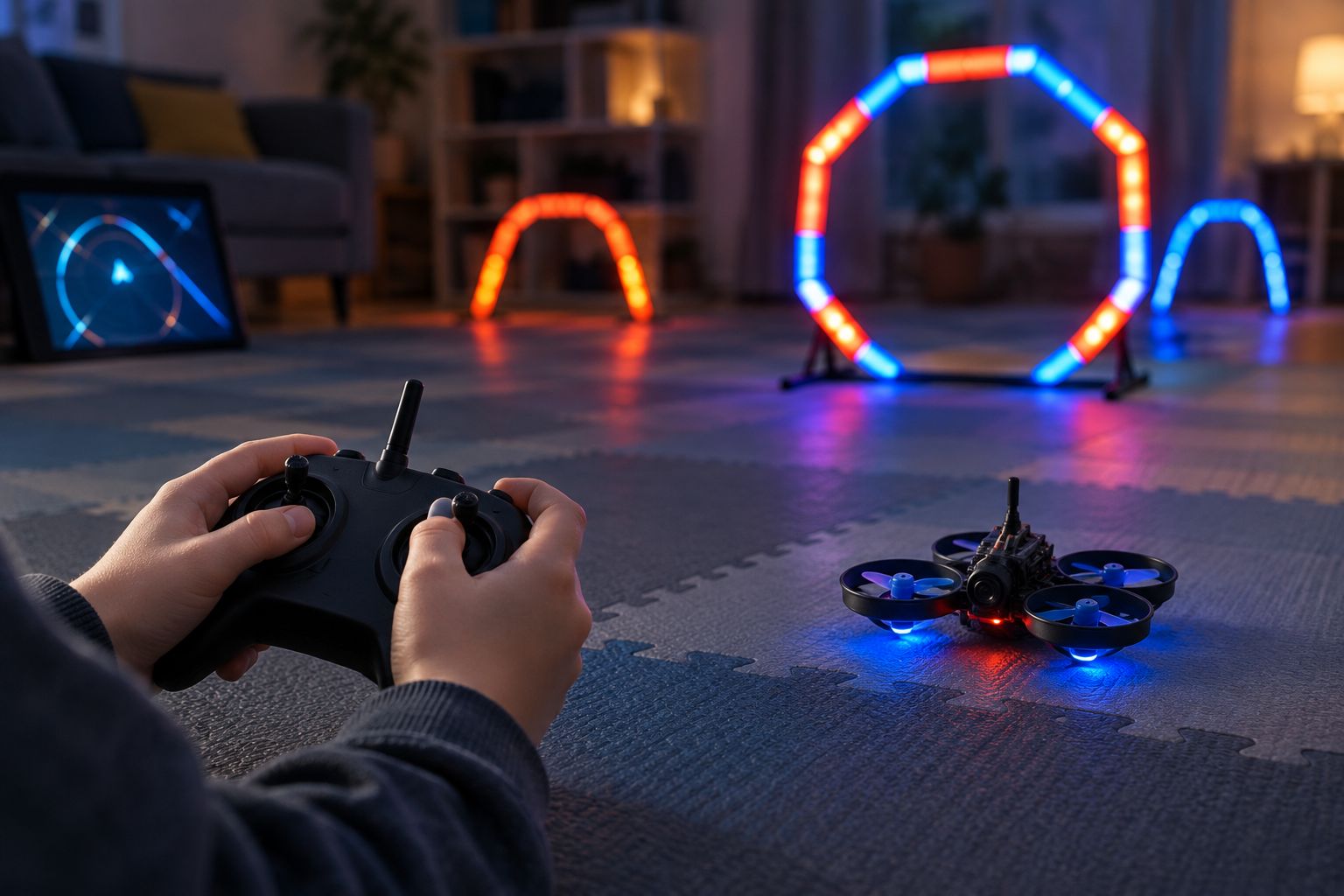
Ducted guards around each propeller are what make micro-FPV the kid-friendly tier.The practical rules for a family setup are simple:
-
Charge only with an adult present, on a non-flammable surface
-
Never charge a battery that looks puffy, dented, or damaged
-
Unplug batteries from the drone after flying
-
Retire any pack that swells, and dispose of it the way the manufacturer or local recycler specifies
-
Pros: real flying with goggles, low crash energy, works indoors in a living room or garage
-
Cons: battery care adds a supervision job, and the quad still needs repairs as skills develop
Verdict: Buy once sim skills are solid, with an adult owning the charging routine. This is the tier most structured FPV drone training programs build their beginner curriculum around.
Full-size FPV racing: highest skill, highest risk
Full-size 5-inch racing quads are built for speed and freestyle, not for learning. Propellers are exposed, speeds are far higher, and a crash can cause real cuts. Batteries are multi-cell packs with much more stored energy.
Outdoor flying also brings federal rules into play. Under FAA rules for recreational pilots, a drone weighing more than 250 g must be registered, every recreational flyer needs to pass the free TRUST safety test, and a pilot flying with goggles needs a visual observer keeping eyes on the drone. Check the FAA's current guidance before any outdoor session in 2026, since the rules apply to kids and adults alike.
-
Pros: the full racing and freestyle experience serious pilots work toward
-
Cons: real injury potential, regulatory requirements outdoors, expensive crashes
Verdict: Wait. This is a graduation point after a long stretch on ducted micro-FPV gear, not a starting point.
Why FPV safety for kids varies so much
The same hobby can be a calm indoor activity or a real hazard. These factors make the difference:
-
Propeller design: ducted guards versus bare blades
-
Space and speed: slow indoor laps through soft gates versus open outdoor racing
-
Battery handling: supervised charging versus unattended charging
-
Practice order: simulator hours first versus jumping straight to a real quad
-
Environment: a cleared indoor room versus an area with people, pets, or hard obstacles
-
Coaching: structured beginner instruction versus handing a kid a controller and walking away
Stack most of these in your favor and FPV becomes one of the more approachable hands-on tech hobbies a kid can pick up. Ignore them and you get the horror stories.
That's the whole idea behind indoor micro-FPV as a category. SquadFlight is building a climate-controlled micro-FPV gym in Las Vegas with LED glow-gate tracks, simulators, and beginner-friendly training, designed around the safe end of this table. The venue isn't open yet, so check the site for what's running right now.
Follow the Las Vegas FPV build
See what SquadFlight is building and what's running before the indoor gym opens.
What age can kids start flying FPV drones?
There's no single official minimum age to start FPV drone flying in 2026. The better test is readiness: can the kid follow battery rules, handle a controller, and accept that crashes are part of learning? Any age can start on a simulator.
Do kids need FPV goggles to fly safely?
No, goggles are how FPV pilots see, not a safety device. Kids can learn on a simulator screen first and add goggles once basic control feels natural. Take breaks, since some new pilots feel motion discomfort in goggles at first.
Is a Tiny Whoop safer than a full-size FPV racing drone?
Yes, a Tiny Whoop is safer than a full-size FPV racer because its propellers are enclosed in ducts and it flies at much lower speeds with a smaller battery. That's why it's the standard first real quad.
FAQ
Is FPV drone racing safe for kids in 2026?
FPV drone racing is reasonably safe for kids in 2026 when they fly ducted micro-FPV quads, practice on a simulator first, and have an adult supervise battery charging. Open-prop 5-inch racers carry real injury risk and are not a starting point.
What's the best way for a kid to start FPV drone racing?
A flight simulator is the best way for a kid to start, because it has zero crash risk and builds the stick skills real flying needs. A ducted micro-FPV quad comes next.
Can FPV drones hurt you?
Open-prop FPV racing drones can cause cuts if a spinning blade hits skin. Ducted micro-FPV quads reduce that risk because the propellers sit inside guards.
Are LiPo batteries dangerous for kids?
LiPo batteries can swell, vent, or catch fire if punctured, overcharged, or charged unattended, so an adult should own the charging routine. Stored and charged correctly, they power the whole hobby safely.
Is drone racing safer than go-karting for kids?
Micro-FPV drone racing and go-karting carry different risks: go-karting puts the kid's body in a moving vehicle, while micro-FPV keeps the pilot standing still and moves the risk to the drone and its battery. Neither is risk-free.
Do kids need to register an FPV drone with the FAA?
Under FAA recreational rules, drones over 250 g must be registered, and every recreational flyer needs to pass the free TRUST test. Check the FAA's current guidance before flying outdoors.
What's the difference between FPV drone racing and regular drone flying?
Regular camera drones hold position on their own and are flown while watching the drone. FPV drones are flown through goggles showing the drone's camera feed, which is what makes fast gate racing possible.
One last thing
The most important skill a young pilot learns in 2026 isn't a flip or a gate split. It's checking a battery before it goes on the charger. A kid who looks every pack over for puffing or damage, and never charges one alone, has the habit that matters most in this hobby. The rest is stick time, and the simulator handles that for free.
Planning a family outing around it? The best indoor activities for families in Las Vegas roundup lists options that work right now while SquadFlight builds its indoor gym.