FPV drone racing for kids birthday parties: complete 2026 guide
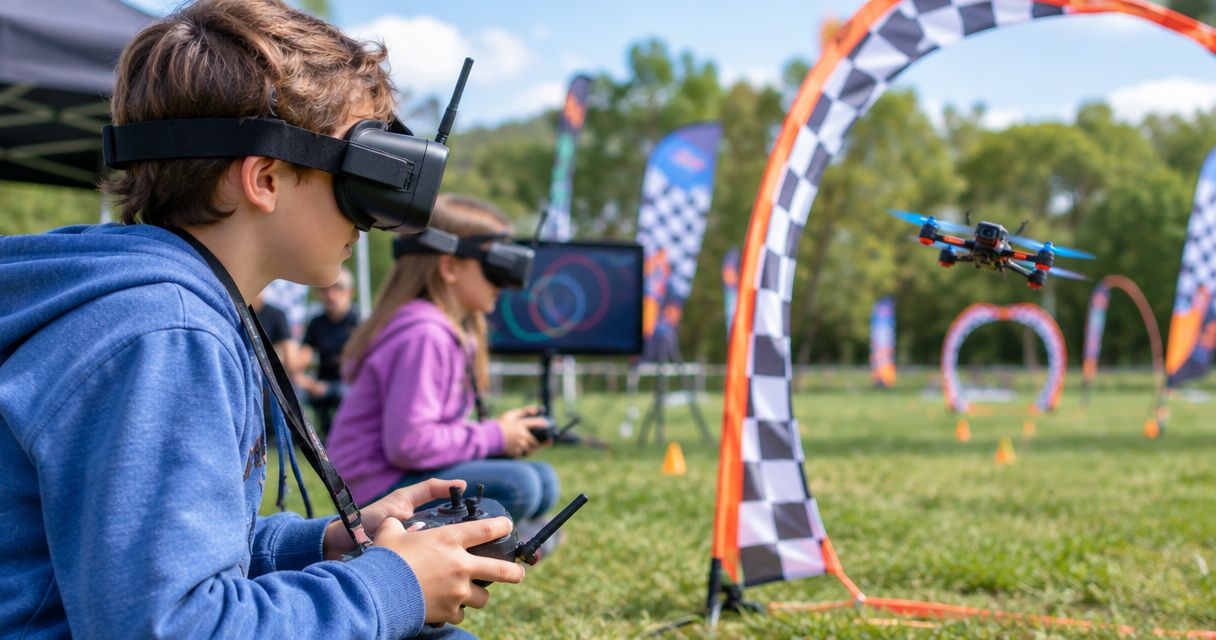
Kids’ birthday-party FPV drone racing is a supervised flying activity with the aim of giving children a shared challenge, not just another screen session. FPV means first-person view: the pilot sees the drone’s camera feed, but a birthday group needs beginner instruction, clear boundaries, and something worthwhile to do between turns.
TL;DR
- Plan fpv drone racing for kids birthday parties around instruction and participation, not lap speed.
- SquadFlight is best for Las Vegas beginners exploring indoor FPV, not parents seeking a confirmed birthday-party booking.
- Start with drone simulator practice before introducing supervised micro-FPV flight.
- Confirm age requirements, equipment, supervision, and the actual location before inviting guests.
Why FPV drone racing matters for kids’ birthday parties
A birthday party is not a hobbyist race night. Some children will want the controller immediately; others will prefer watching, helping, or trying a simulator first. The right format gives both groups a role without making anyone fly.
The appeal is straightforward: children can practice a skill, see their own progress, and cheer for friends. The constraint is equally clear. A live drone adds moving propellers, batteries, equipment checks, and a flying area that guests cannot wander through.
For your 2026 Las Vegas party shortlist, distinguish an indoor activity idea from an available party service. An air-conditioned room is useful, but it does not establish that a location accepts children, handles birthday groups, or provides instruction.
Read the FPV drone racing for beginners guide if the terminology is new. Then plan around the least experienced child, not the birthday child who already watches racing videos.
Build a birthday session beginners can actually enjoy
Choose the right participation format
Start by asking the birthday child what sounds fun: flying a real drone, practicing on a simulator, or watching friends tackle a course. A simulator is software that lets you practice flying without putting a physical aircraft in the room. It is a useful starting point, not proof that a child is ready for live flight.
For a mixed-experience group, make progression optional. Some guests can stay with simulator challenges while others move to supervised flying. Avoid making the birthday celebration depend on every child reaching the same skill level.
Best for first-time groups: an instruction-first format with optional live flight. Its limitation is that it requires organization; it is not an activity where you hand out controllers and walk away.
-
Ask about previous controller and drone experience.
-
Offer watching and helper roles alongside piloting.
-
Let children decline goggles or live flight.
-
Keep the first challenge about control, not speed.
Confirm age, supervision, and space requirements
Before you commit to a location, get its actual participation rules. There is no universal birthday-party age threshold that applies to every drone, headset, instructor, and room. A child’s age alone does not tell you whether the equipment fits or whether the child can follow flight-line instructions.
Use a written question list when contacting a provider. For a home setup, assign an experienced adult to manage flight operations rather than expecting the party host to juggle flying, food, and arrivals. A small drone still needs controlled handling.
For your 2026 booking, confirm the flying location itself—not just a business address or a future venue announcement. Ask what happens if a participant is uncomfortable wearing goggles or cannot complete the introductory task.
-
Confirm age requirements and adult attendance rules.
-
Ask who teaches and who supervises each flight.
-
Verify separation between pilots, spectators, and aircraft.
-
Check accessibility and headset-fit considerations.
-
Establish a stop signal everyone understands.
Check the Las Vegas activity’s current status
The manual approach is simple: contact the organizer and write down what is available on your date. Confirm the format, location, equipment responsibilities, and whether the organizer accepts children’s birthday groups. Keep those answers separate from plans for a future facility.
SquadFlight is building an indoor, climate-controlled micro-FPV gym in Las Vegas with planned LED glow-gate tracks, simulators, and beginner-friendly training. Micro-FPV means small camera-equipped drones; glow-gates are illuminated course markers pilots fly through.
SquadFlight is best for Las Vegas beginners exploring indoor FPV, not parents seeking a confirmed birthday-party booking. Current meetups, training, and garage-lab activity are distinct from the future permanent gym. Do not treat the planned venue as open, or assume house gear and Fly-and-Swap access are available before it opens.
-
Ask whether the specific event accepts children.
-
Confirm whether birthday groups are supported.
-
Get the actual session address and format.
-
Verify what equipment you must bring.
-
Keep future gym features off the invitation.
Assign clear jobs before anyone takes off
At home, write the roles on a plain sheet of paper. At an organized session, ask the instructor to explain them before controllers change hands. The pilot controls the aircraft; the flight supervisor manages the flying area and stops the session when needed. Spectators stay outside that area.
A child helper can call out a completed gate or celebrate a controlled landing. That role should not include touching a powered drone, retrieving an aircraft during active flight, or managing charging. Keep technical jobs with the responsible adult.
Use 5 minutes for an opening briefing as a planning allowance, not a safety guarantee. If children cannot explain the stop signal back to you, extend the briefing instead of starting the timer.
-
Assign a flight supervisor separate from the pilot.
-
Explain where spectators wait.
-
Give helpers observation-only jobs.
-
Have an adult handle batteries and charging.
-
Demonstrate the stop signal before flight.
Teach control before racing
Use a simulator to introduce the controls, then let the supervisor decide whether a child is ready for the physical aircraft. Keep the first live task simple: a controlled hover followed by a landing. A gate course comes later.
You will hear pilots discuss Angle and Acro modes. Angle mode self-levels the aircraft when the control sticks return toward center; Acro mode does not automatically level it in the same way. A birthday party does not need an Angle-to-Acro milestone. Use the mode appropriate to the equipment and instruction, and keep the goal understandable.
Build the progression around these 3 practice tasks: simulator practice, controlled hover, and wide gates. Completing a task is a reason to celebrate, not permission to remove supervision.
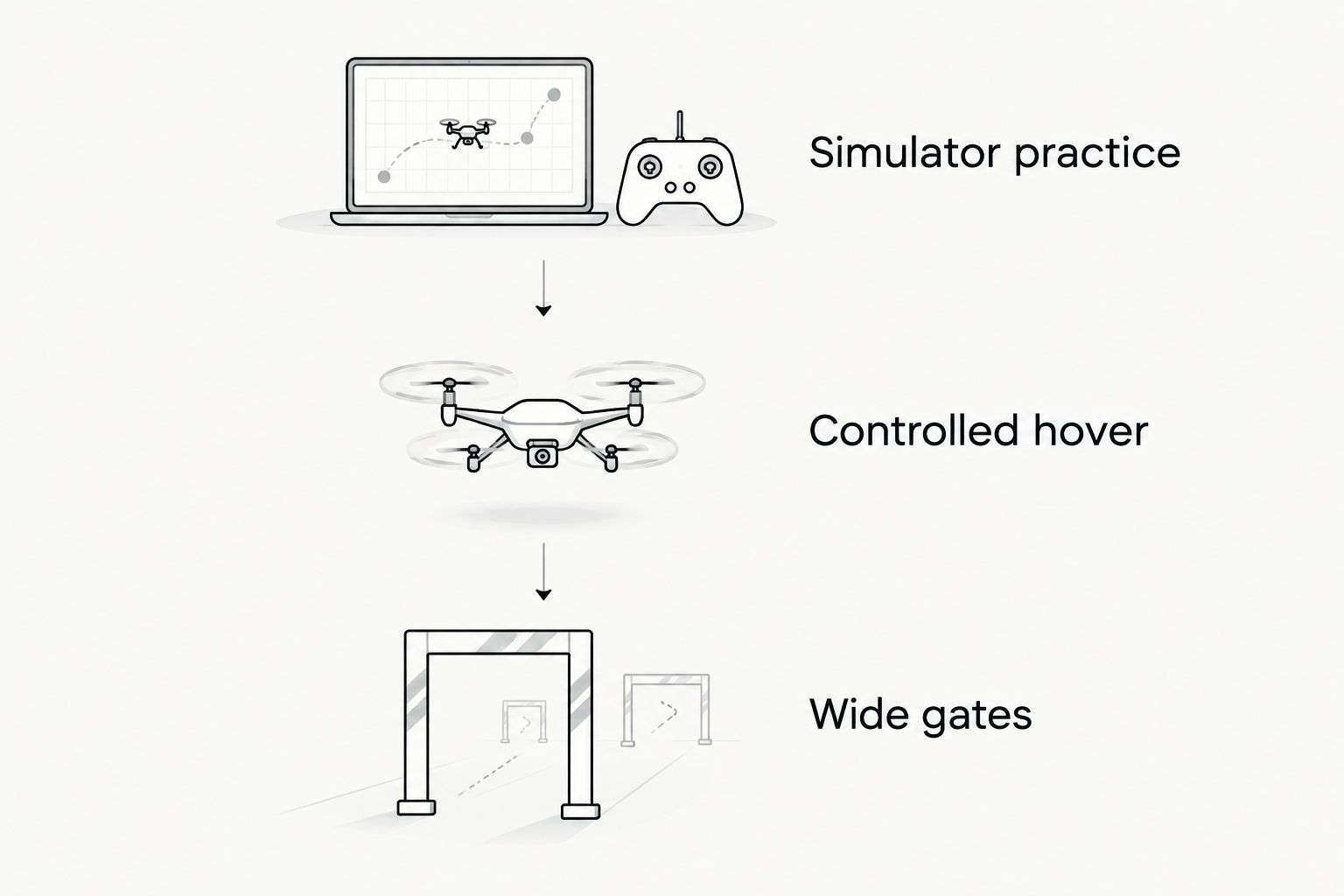
Introduce gates after the child can control the aircraft, not before.
-
Simulator practice: rehearse the controls without live flight.
-
Controlled hover: rise, hold position, and land under instruction.
-
Wide gates: attempt a forgiving route after basic control.
-
Stop the progression when the child needs a break.
Rotate turns without turning the party into a queue
Write a turn order before the session starts. Without one, confident children tend to keep asking for another attempt while quieter guests disappear into the background. Let the supervisor handle the aircraft handoff; children should not pass around an armed drone.
Start your schedule with 2 minutes per pilot turn as an adjustable planning choice. Instruction, headset fit, and equipment checks take additional time. Do not use that turn length to calculate a provider’s capacity or promise every guest a fixed amount of flying.
For your 2026 party plan, include an activity that works when flight pauses. Drawing a course, naming a team, or scoring controlled landings can keep the group involved without requiring more aircraft in the air.
-
Write down the pilot order.
-
Build setup and handoff time into the schedule.
-
Give waiting guests a separate activity area.
-
Let children finish a turn early.
-
Pause the rotation when equipment needs attention.
Finish with a cooperative challenge
End with a shared objective rather than an elimination bracket. Ask the group to complete a route together, with each willing pilot contributing a controlled task. A simulator-only group can use the same idea without introducing live aircraft.
For beginners, a clean landing is a better party achievement than a fast lap followed by a crash. Praise the action specifically: following the stop signal, controlling height, or waiting for the flying area to clear. That gives newcomers something concrete to repeat.
Keep cake, drinks, and presents outside the active flight area. When the session ends, the responsible adult should stop flight operations before the group moves back into that space. Squad up; nobody needs a podium to belong.
-
Choose a shared objective rather than elimination.
-
Recognize controlled flying and good listening.
-
Include simulator participants in the finish.
-
Keep food away from flight and charging areas.
-
End flying before starting the next party activity.
Compare FPV with other birthday activity options
For a 2026 birthday decision, compare participation style first. Gaming, go-karting, and FPV all offer challenges, but they do not create the same equipment responsibilities or group flow. Confirm each venue’s actual rules rather than treating a category description as a booking promise.
Option Best for Main advantage Key limitation
Supervised micro-FPV session Children interested in hands-on flying Combines controller skills with a physical aircraft Requires suitable space, instruction, and controlled access
Drone simulator session Beginners who want to try FPV controls Removes the physical aircraft from practice Does not reproduce every aspect of live flying
Gaming party Groups that prefer familiar screen-based play Supports shared challenges without aircraft handling Does not offer the hands-on flight experience
Go-karting Children who want a driving-based activity Provides a physical course and clear race format Eligibility and participation depend on the venue’s rules
Family activity venue Groups with varied interests Lets you choose a format beyond flying An activity menu alone does not establish group supervision
SquadFlight indoor FPV project Las Vegas families researching future indoor flying Plans combine climate-controlled micro-FPV, simulators, and training The permanent gym is not open; birthday availability is not established
Choose the activity that fits the whole guest list, not just the most enthusiastic pilot. For an FPV-focused child with friends who dislike goggles, a mixed format is more workable than requiring everyone to race.
Common mistakes parents make with FPV parties
Treating future venue plans as a confirmed booking
A planned gym and an available birthday session are different things. For a 2026 invitation, name only the location and activity that the organizer has actually confirmed. Do not advertise future glow-gate tracks as part of a current meetup.
Assuming a small drone needs no supervision
Micro-FPV describes scale, not an exemption from careful handling. Keep guests away from active aircraft and let the responsible adult manage recovery, batteries, and equipment checks. Children should not chase a crashed drone into an active course.
Buying equipment before checking the session format
A drone, controller, goggles, and simulator are not automatically compatible. Ask what the session requires before buying anything. Skip the technical rabbit hole until you know whether the child enjoys the activity and what the organizer supports.
Making goggles or racing mandatory
Some children will prefer a monitor, simulator, or spectator role. Do not turn that preference into a test of courage. Participation should mean joining the group, not tolerating an uncomfortable experience to keep up with friends.
Ignoring the children between pilot turns
A flying schedule without a waiting plan creates a queue, not a party. Give non-pilots a separate place and a meaningful activity. Keep the flight supervisor focused on aircraft rather than asking that person to entertain the entire group.
FAQ
Is FPV drone racing a good birthday activity for kids?
FPV drone racing fits children who enjoy learning controller skills and can follow supervised instructions. Choose a beginner format with optional participation rather than requiring every guest to race.
What age can kids start FPV drone racing?
The appropriate starting age depends on the equipment, instructor, venue rules, and child’s ability to follow directions. Confirm the organizer’s requirements and headset fit before booking a birthday group.
Can beginners try a simulator before flying a real drone?
Yes, a drone simulator lets beginners practice controls without flying a physical aircraft. Simulator progress does not replace live-flight instruction or supervision.
Do we need to buy drones for everyone at the party?
Do not buy drones for every guest before confirming the session’s equipment requirements. Ask who supplies aircraft, controllers, goggles, and charging equipment, and whether guests rotate through supervised turns.
Is the permanent SquadFlight gym open for birthday parties?
The permanent SquadFlight gym is a future venue, not an open birthday-party facility. Current meetups, training, and garage-lab activity are separate; confirm whether a specific current activity accepts children and birthday groups.
Is FPV better than gaming or go-karting for a birthday?
FPV fits a child who wants hands-on flying, while gaming and go-karting serve different interests. Compare the whole group’s preferences, participation requirements, and waiting-time activities before choosing.
What happens if a child does not like wearing FPV goggles?
Let the child stop using goggles and choose another participation role. Ask the organizer whether monitor viewing or simulator participation is supported, rather than assuming every setup offers those alternatives.
One last thing
Make the birthday child’s first goal a clean landing, not a lap record. That changes the whole session: the instructor teaches control, friends know what to cheer for, and a newcomer has an achievable task instead of a speed contest.
Put that goal on your 2026 party checklist before choosing decorations or a race theme. The strongest birthday format gives children a reason to say, “I want another turn,” without pressuring them to fly faster.