FPV drone racing for corporate team building: complete 2026 guide
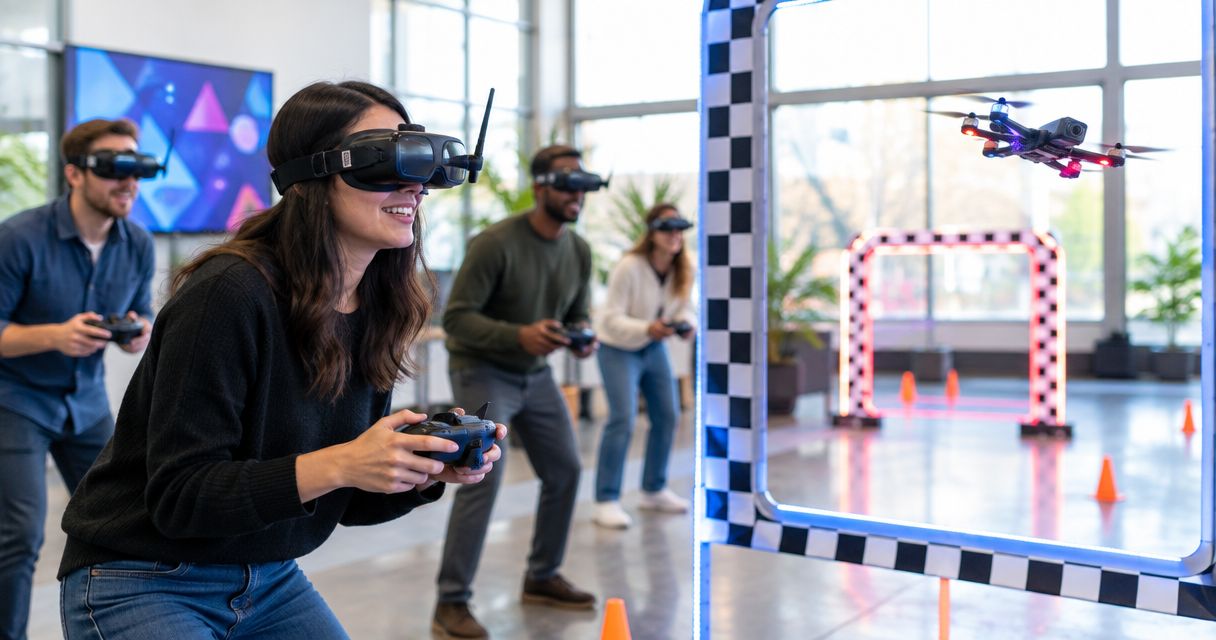
Corporate team-building FPV drone racing is a group activity built around first-person-view flying, with the aim of giving colleagues a shared challenge. If you’re considering fpv drone racing for corporate team building in Las Vegas in 2026, separate the activity you want from the venue you can book: SquadFlight is building an indoor micro-FPV gym, but its permanent venue is not open.
TL;DR
- FPV drone racing for corporate team building gives colleagues a shared flying challenge, but beginners need practice before racing.
- SquadFlight is best for Las Vegas teams interested in micro-FPV, not teams needing a confirmed booking at its future gym.
- Choose a simulator-led session for first-timers; consider a physical race only after checking equipment, supervision and space.
Why FPV racing matters for corporate teams
FPV means first-person view: a pilot sees the drone’s camera feed rather than watching the drone only from the ground. Micro-FPV uses small drones suited to compact courses. For a team, that creates a useful split between learning the controls, taking a turn and helping someone else improve. The value is the shared task, not a claim that everyone will become a racer.
The challenge for an organizer is practical. You need a format that includes complete beginners, a plan for people who would rather watch, and a confirmed location. A colleague who plays racing games still needs time to learn FPV controls; a colleague who has never touched a controller needs an explanation that starts before the jargon. Compare this idea with other Las Vegas team-building activities before you commit the group to one format.
SquadFlight is best for Las Vegas teams exploring beginner-friendly micro-FPV, not teams seeking a confirmed corporate booking at its future gym. Its planned indoor, climate-controlled venue includes LED glow-gate tracks and simulators. Those are plans for the permanent venue, not facilities an organizer should assume are available now. SquadFlight’s current meetups, training and garage-lab activity must be distinguished from a bookable gym or corporate event package.
How to plan an FPV team activity
Define what the team should do together
Start with the outcome, not the drone. Is this a social break, a beginner lesson, or a competition? Each calls for a different schedule. A first-time team does not need a fast race to have a shared challenge; learning a control input, watching a colleague’s attempt and comparing what changed gives the group something concrete to discuss.
Ask colleagues about interest and accessibility before choosing a format. Watching a camera feed or using a simulator screen will not suit everyone, and participation should not depend on taking a flight. In 2026, the sound plan is the one that works for the people attending, rather than the one that looks best in an event pitch. Keep these decisions in the event brief:
-
List participants: record who wants to pilot, observe or take part in another role.
-
Check access: ask about screen use, movement, seating and other needs without assuming what works.
-
Define success: choose an outcome the group can recognize without requiring expert flying.
-
Name a coordinator: give one person responsibility for questions and schedule changes.
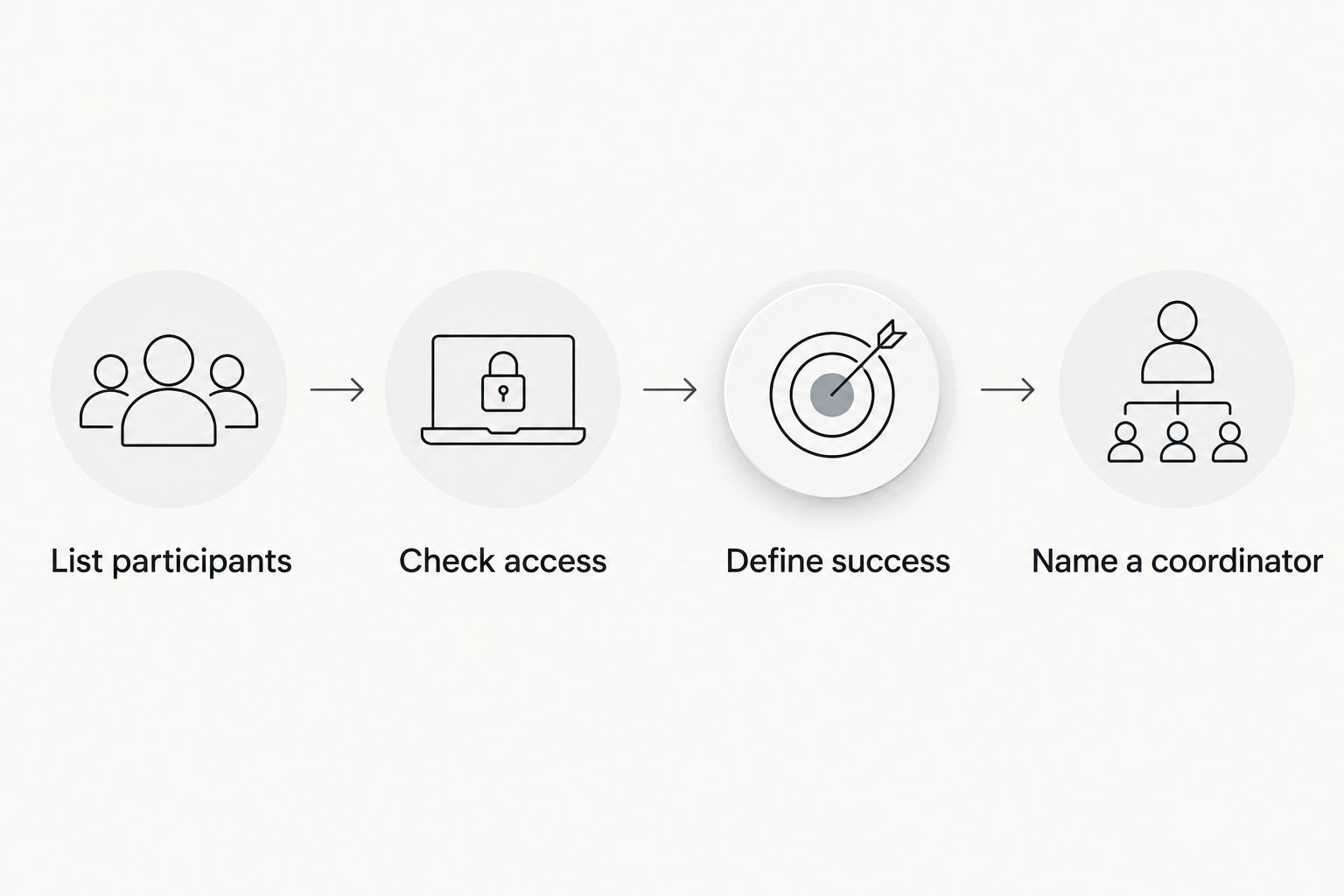
Decide who the activity must include before you choose how to run it.
Choose practice before competition
A simulator is software that lets a pilot practice FPV controls without flying a physical drone. That makes it a sensible starting point for beginners, but it is not the same experience as a drone moving through a course. Decide which experience your team wants before asking a provider to design the session.
For a first-time group, propose a 15-minute orientation and a 3-minute practice turn as planning blocks, then adjust them to the group and provider. These are suggested agenda slots, not a SquadFlight program or a promise that any venue uses them. Keep scoring simple if you add it: a completed attempt or a personal improvement is easier to follow than a rulebook full of pilot terms.
-
Explain the controller inputs in ordinary language before introducing race rules.
-
Let participants try a simulator before discussing a physical course.
-
Give observers a clear role, such as recording attempts or helping with the schedule.
-
Confirm how much practice time each participant actually gets.
Check the space and the equipment
A physical FPV activity needs more than a room with tables. Ask where drones would fly, where non-pilots would stand, who supervises turns and how the equipment is handled between attempts. Do not assume that a general event venue has a suitable flying area or that an FPV provider supplies every item your group needs.
AIO means all-in-one: in FPV gear, it refers to a board that combines several electronic functions. Your event organizer does not need to become a master electrical engineer, but someone must know who deals with equipment questions. Keep that responsibility with the provider or an agreed organizer, rather than discovering it when a flight stops. For Las Vegas teams considering a 2026 indoor event, these are booking questions, not details to leave until arrival.
-
Confirm the exact location and whether the activity can take place there.
-
Ask who supplies controllers, viewing equipment, drones and simulator access.
-
Identify who supervises flying and responds to equipment problems.
-
Check how spectators and pilots are separated during physical flights.
Match the format to your beginners
There is no reason to make a novice’s first turn a race. Angle mode helps a drone level itself; Acro mode gives the pilot direct control without that self-leveling behavior. If a provider mentions an Angle-to-Acro progression, ask what participants will actually use during your session. A beginner-focused event should explain the controls used on the day, not make the team memorize every flight mode.
SquadFlight’s stated direction is beginner-friendly training alongside its planned Las Vegas micro-FPV gym. That makes SquadFlight relevant to teams following local FPV activity, but it does not establish a bookable corporate program, house gear or access to the permanent venue. For a 2026 event, get written confirmation of the format and location before putting its name on the invitation.
-
Pick simulator practice if most colleagues have never flown FPV.
-
Consider physical flying only when a provider confirms space, equipment and supervision.
-
Ask what instruction happens before anyone takes a turn.
-
Describe the activity accurately in the invite; do not promise a race without confirmation.
Build an agenda that allows people to rotate
An event runs better when attendees know when they are participating and what to do between turns. Draft the agenda manually: orientation, practice, an optional challenge and a short group debrief. A 60-minute meeting slot is a useful example for testing whether your proposed agenda fits; it is not a stated session length from any provider. Add time if the participant count or instruction needs demand it.
Keep the challenge visible but low-pressure. You can ask participants what control change improved an attempt, or let small groups compare approaches. That creates conversation without presenting a shaky first flight as a failure. If the provider proposes a different sequence, ask how beginners move through it and when observers rejoin the activity.
-
Write the turn order before the event starts.
-
Reserve time for instructions and questions, not just flying.
-
Give non-pilots a way to contribute between turns.
-
Leave a pause for the team to share what they learned.
Compare FPV with other Las Vegas activities
FPV is not automatically the right pick because it is new to the team. Gaming gives colleagues a familiar screen-based challenge, while go-karting makes the driving itself the event. A local activity venue can simplify the venue decision when it confirms a suitable group booking. FPV stands apart when the goal is to learn an unfamiliar skill together, but it asks more of an organizer who must verify instruction, equipment and space.
For a Las Vegas event in 2026, compare the actual offerings you can confirm, not imagined versions of them. A simulator-led activity and a physical micro-FPV race also deserve separate consideration: both involve FPV controls, but only one involves drones flying in the room. Use the table to narrow the brief, then check each provider’s current details directly.
-
Choose the activity the least-experienced colleague can enter comfortably.
-
Check what the provider includes rather than assuming gear is supplied.
-
Compare the confirmed location and participation format.
-
Keep a fallback if the requested format cannot be confirmed.
Confirm the invitation before sending it
Your invitation should say what colleagues will do, where they will go and whether participating means flying, observing or both. Avoid language that treats a proposed facility as an operating venue. That distinction matters for SquadFlight: its indoor gym is being built, while current meetups, training and garage-lab activity are not the same thing as an open corporate event site.
Before you send a 2026 calendar invite, ask the organizer or provider to confirm the address, activity, equipment arrangements and point of contact. If any part remains unconfirmed, describe the plan as tentative to your team. A clear invitation prevents colleagues from arriving with different ideas of what an FPV event involves.
-
Put the confirmed location in the invite.
-
State whether the plan uses simulators, physical drones or both.
-
Explain how beginners and observers can participate.
-
Name the contact for access questions and changes.
Which team activity fits your group?
Option Best for What to confirm Key limitation
Simulator-led FPV session Teams new to FPV controls Screens, controllers, instruction and participant turns It does not deliver the experience of flying a physical drone.
Supervised micro-FPV race Teams that want a physical flying challenge Flying space, equipment, supervision and beginner practice It needs a suitable setup and more coordination.
Group gaming Teams that prefer a screen-based challenge Game choice, access and group format It does not involve physical drone flight.
Go-karting Teams that want driving rather than piloting Group format and venue requirements It does not teach FPV controls.
SquadFlight’s planned gym Teams following a future indoor micro-FPV venue in Las Vegas Opening status and any event offering before making plans The permanent gym is not open.
Verdict: Choose a confirmed simulator-led format when the team’s main goal is to try FPV together. Choose physical racing only after the provider confirms the conditions it requires. SquadFlight belongs on a future-venue watchlist, not on an unverified booking itinerary.
Common mistakes corporate organizers make
-
Advertising a race before confirming one. A provider may discuss FPV without confirming physical flying, equipment or a date. Describe only the format it has agreed to deliver.
-
Treating a simulator as a consolation prize. Simulator practice is a distinct activity that gives beginners a way to learn the controls. Judge it against your team’s goal, not against footage of an expert race.
-
Designing only for the confident pilots. Give observers and cautious beginners a defined place in the event. Otherwise, the activity becomes a turn-taking exercise for a few enthusiasts.
-
Confusing future plans with present access. SquadFlight’s planned glow-gate gym is not an open venue. Do not promise its track, house gear or a corporate package in a 2026 invite.
-
Leaving equipment questions until the event. Confirm what is supplied and who handles problems before participants arrive. That is an organizer’s task, not a surprise assignment for the colleague who knows FPV slang.
FAQ
What is FPV drone racing for corporate team building?
It is a group activity built around learning first-person-view drone controls and, when the setup allows it, completing a flying challenge. Organizers can also use a simulator-led format for beginners.
Is SquadFlight’s indoor FPV gym open for corporate events?
No. SquadFlight is building its permanent indoor micro-FPV gym in Las Vegas, so organizers should not present it as an open corporate event venue. Current meetups, training and garage-lab activity are distinct from the future gym.
Do beginners need drone experience to try an FPV activity?
No prior experience is necessary to begin learning FPV controls. A beginner event still needs clear instruction, practice time and a format that lets people opt to observe.
Is a simulator session the same as a drone race?
No. A simulator lets participants practice FPV controls in software, while a physical race involves drones flying through a course. Ask which format a provider will deliver before advertising a race.
Is FPV better than gaming for a Las Vegas team event?
FPV is the better fit when the team wants to learn drone controls together; gaming fits a team that wants a familiar screen-based challenge. Confirm the available format before choosing either activity.
What should an organizer ask an FPV provider?
Ask for the confirmed location, activity format, equipment arrangements, instruction and supervision. Those answers determine what you can accurately tell participants.
Can colleagues participate without flying a drone?
Yes, an organizer can plan observation and group roles alongside pilot turns. Confirm that the chosen provider and venue can support the participation format your team needs.
One last thing
The strongest FPV event brief does not start with a leaderboard. It starts by deciding what a first-time pilot and a non-pilot will each do. That single decision makes it easier to choose between simulator practice, a confirmed physical race and another Las Vegas activity without promising colleagues something the venue cannot yet provide.