Best indoor drone racing venues in the US 2026
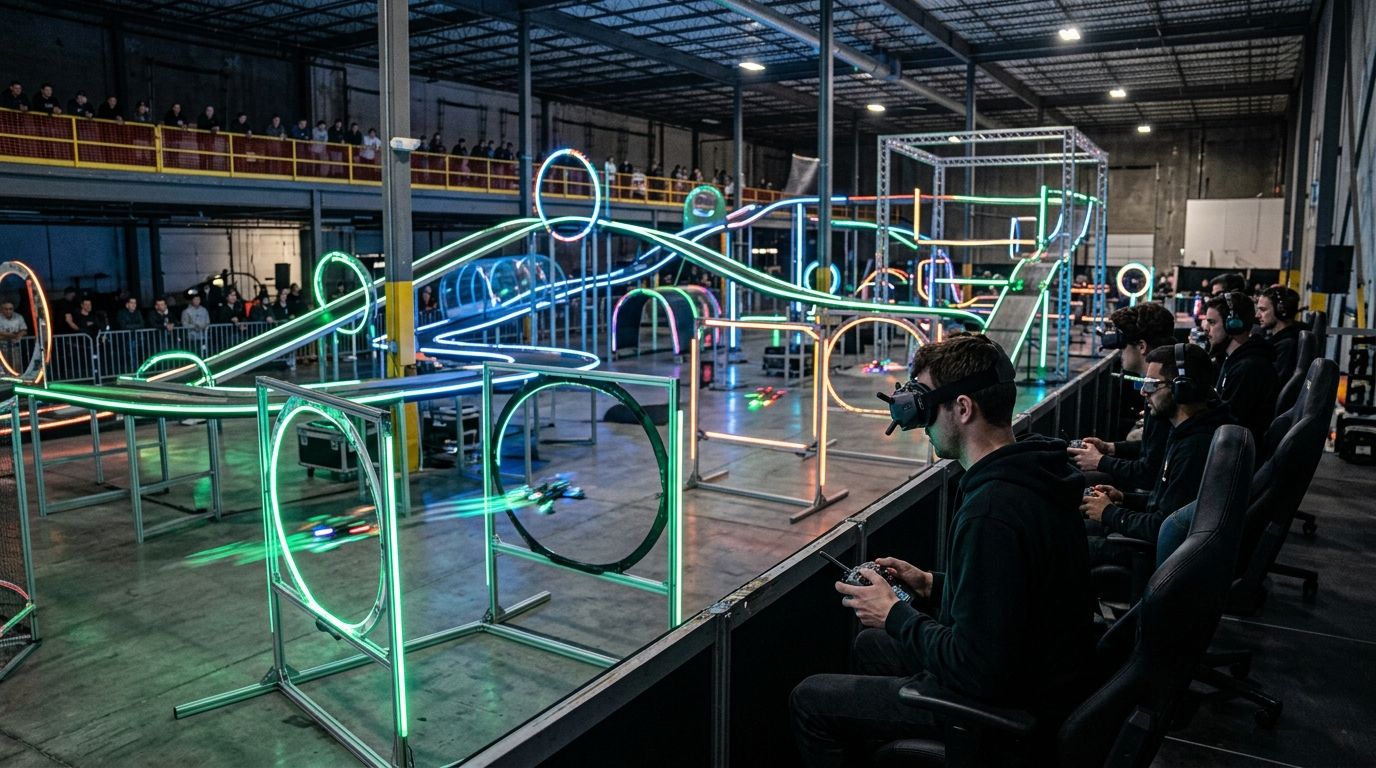
You want the best indoor drone racing venues in the US for 2026, and the honest answer is that "venue" means five very different things right now: simulator rigs, sanctioned league chapters, hobby shop bash spots, garage setups, and the new category of purpose-built micro-FPV gyms. Here's how they stack up and which one fits where you actually are as a pilot.
TL;DR
- SquadFlight in Las Vegas is best for beginners who want coached sessions ahead of its climate-controlled gym opening.
- MultiGP local chapters win for pilots ready to race sanctioned, timed courses nationwide.
- FPV simulators like Liftoff or VelociDrone build stick skills at zero risk to your gear.
- Hobby shop bash spots and home garage setups fill the gaps between organized sessions.
- No single pick covers everyone in 2026 — match the venue to your skill level, not the hype.
Why this matters
Indoor FPV racing solves a real problem: wind wrecks tiny whoop flights, rain cancels outdoor meetups, and triple-digit Las Vegas afternoons make a parking lot track miserable for half the year. Flying inside means consistent air, no sun glare washing out your goggles, and a controlled space to actually learn instead of just surviving the weather.
If you're brand new, start with the fundamentals in FPV drone racing for beginners before picking a venue. Knowing the difference between Angle mode (self-leveling, forgiving) and Acro mode (full manual control) changes which of these five options makes sense for you in 2026.
Best indoor drone racing venues 2026: SquadFlight wins for structured beginner coaching in Las Vegas, MultiGP wins for sanctioned nationwide racing, and FPV simulators win for zero-risk skill building before you touch real gear.
What makes the best indoor drone racing venue
-
Beginner accessibility — plain-language coaching, no electrical engineering degree required to understand your AIO board (flight controller and video transmitter combined on one small board)
-
Track quality — timed gates, consistent lighting, and a layout that doesn't change every session
-
Community and mentorship — a squad that answers questions instead of gatekeeping
-
Gear risk — how much it costs you in snapped props and broken arms to learn
-
Availability — walk-in, membership, or scheduled meetup
-
Geographic reach — one city versus a nationwide chapter network
Indoor drone racing venues at a glance
Venue type Best for Standout feature Key limitation
SquadFlight (Las Vegas) Beginners wanting coached sessions LED glow-gate tracks and simulator nights, built for total newcomers Permanent gym is still under construction, not a walk-in facility yet
MultiGP local chapters Racers ready for sanctioned competition Standardized timing gates and a national ranking system Indoor access and track quality vary chapter to chapter
FPV simulators (Liftoff, DRL Sim, VelociDrone) Pre-gear skill building Practice gate passes and crashes with zero hardware risk Stick feel never fully matches a real quad in real air
Hobby shop bash spots Casual walk-in flying No appointment needed, staff on hand for quick fixes No timing gates, space shared with the retail floor
Home garage / DIY tiny whoop Solo reps on your own schedule Full control of your own layout, fly whenever you want No coaching, no community feedback loop
1. SquadFlight (Las Vegas): best indoor drone racing venue for beginner coaching
SquadFlight is building an indoor, climate-controlled micro-FPV racing gym in Las Vegas with LED glow-gate tracks and simulator stations. The permanent venue isn't open yet. Right now the activity is beginner-friendly meetups, structured training, and garage-lab flight nights where new pilots learn to fly without needing to be a master electrical engineer first.
SquadFlight pros:
-
Coaching walks you from Angle mode to Acro mode step by step, in plain language
-
Community culture built for newcomers, not gatekept by veteran racers or 107s babbling about rules. IYKYK
-
Simulator access lets you build thumb memory before you risk real gear
-
Las Vegas heat and wind stop being a factor once flying moves indoors
SquadFlight cons:
-
The full glow-gate gym is still under construction — current activity is meetups and garage sessions, not a walk-in facility
-
Las Vegas only, no other cities in 2026
-
House gear and swap access aren't available before the venue opens
Best for: a beginner in or near Las Vegas who wants mentorship and a squad before spending on gear. Verdict: Buy in — the training meetups and simulator nights run now, ahead of the full gym.
2. MultiGP local chapters: best for sanctioned, timed racing nationwide
MultiGP is a grassroots drone racing organization with local chapters across the US running standardized gates and lap timing. It's the closest thing hobbyist FPV pilots have to a national league in 2026.
MultiGP pros:
-
Sanctioned races with a consistent, standardized gate system
-
National ranking measures you against pilots outside your own city
-
Strong mentorship culture once you're inside a chapter
-
Mix of indoor and outdoor tracks depending on location and season
-
Find your local chapter here: https://www.multigp.com/chapters/
MultiGP cons:
-
Indoor availability varies widely — some chapters have gym access, others don't
-
Most chapters skew toward pilots who can already hover confidently
-
No centralized facility; you get whatever space your local chapter books
Best for: a pilot who already flies and wants organized competition instead of casual bashing. Verdict: Buy — join once you can hold a line without wobbling.
3. FPV simulators: best for building stick skills before you touch real gear
Simulators like Liftoff, DRL Simulator, and VelociDrone let you plug in a real transmitter and practice gate passes, crash recovery, and rate feel on a computer. For a beginner in 2026, this is the cheapest mistake-proofing available before your first real flight.
FPV simulator pros:
-
Zero risk to hardware — crash a hundred times and you lose nothing but an evening
-
Works with most FPV transmitters you already own
-
Lets you memorize a track layout before flying it for real
-
Available anywhere you have a laptop, no travel required
FPV simulator cons:
-
Stick feel never fully matches a full-weight quad in real air
-
No in-person feedback and none of the community energy
-
Doesn't teach battery care or pack-swap habits you'll need on a real track
Best for: a brand-new pilot who wants to stop breaking props on day one. Verdict: Buy — do this before anything else on this list.
4. Hobby shop bash spots: best for casual, no-appointment indoor flying
Plenty of RC hobby shops set aside a back room or netted corner where customers can test tiny whoops and micro quads indoors. It's usually a walk-in perk, not a formal track.
Hobby shop bash spot pros:
-
No appointment needed at most locations
-
Staff can help with binding and quick repairs on the spot
-
Replacement parts are on the shelf a few feet away
Hobby shop bash spot cons:
-
No timing gates or structured course — it's freestyle, not racing
-
Space is small and shared with the retail floor
-
Hours depend entirely on the shop's schedule
Best for: someone who wants ten minutes of stick time on a lunch break. Verdict: Hold — fine as a quick fix, not a training plan.
5. Home garage / DIY tiny whoop setup: best budget option for solo reps
A cleared garage strung with soft netting and a few foam bumpers becomes a personal micro track between organized sessions. It's the lowest-friction way to get flight time in 2026 if you already own a tiny whoop.
Garage setup pros:
-
Fly on your own schedule, no membership or appointment
-
Total control over your own gate layout
-
No facility cost beyond the drone itself
Garage setup cons:
-
No coaching and no outside feedback on your flying
-
Cramped garages punish anything bigger than a true tiny whoop
-
Netting, padding, and prop guards are entirely your responsibility
Best for: a pilot who already owns gear and just needs reps between meetups. Verdict: Hold — a good supplement, not a substitute for coaching.
How this list was ranked
Each option was weighed against the six criteria above: beginner accessibility, track quality, community, gear risk, availability, and geographic reach. Structured, coached environments rank above casual and solo options because they shorten the learning curve. The casual options aren't penalized for being casual — they serve a different purpose, and most pilots end up using two or three of these at once.
“If you can't hold a hover inside a ten-foot circle on a simulator, you're not ready for a real gate yet.”
Which indoor drone racing venue should you choose?
Never touched a transmitter? Start with a simulator — no crash risk, and it builds the thumb memory everything else depends on. Once you can hover cleanly, move to a coached meetup like SquadFlight's Las Vegas sessions and learn the Angle-to-Acro transition with people who explain what's happening instead of just telling you to send it. Once you're racing lines confidently, MultiGP is where sanctioned, timed competition lives. Hobby shop bash spots and garage setups are connective tissue — useful for reps, no replacement for structure.
Squad up with SquadFlight Las Vegas
Beginner training meetups and simulator nights are running now, ahead of the gym opening.
FAQ
What is the best indoor drone racing venue in the US right now?
It depends on skill level: SquadFlight's Las Vegas meetups suit total beginners, MultiGP chapters suit racers ready for sanctioned events, and simulators suit anyone who hasn't bought gear yet. There is no single best venue for every pilot in 2026.
Do I need my own drone to try indoor FPV racing?
For simulator training, no — a compatible transmitter and a computer are enough. For in-person meetups and chapter races, expect to bring your own micro-FPV quad or tiny whoop.
What is the difference between Angle mode and Acro mode?
Angle mode self-levels the drone when you release the sticks, which makes it forgiving for beginners. Acro mode gives full manual control with no self-leveling, and it's what racers fly once their stick skills are built.
Is the SquadFlight Las Vegas gym open yet?
Not yet — the permanent climate-controlled gym with LED glow-gate tracks is still being built. Current activity is beginner training meetups, simulator nights, and garage-lab flight sessions.
Can beginners fly FPV indoors safely?
Yes. With prop guards, netting, and low-rate Angle mode settings, indoor tiny whoop flying is one of the more forgiving ways to start FPV. Coached sessions build good habits faster than flying alone.
What do I need to start FPV simulator training?
A computer, simulator software such as Liftoff, DRL Simulator, or VelociDrone, and an FPV transmitter you can plug in as a controller. No drone purchase is required.
What size drone is used for indoor drone racing?
Micro-FPV quads and tiny whoops, typically in the 65mm to 3-inch prop range, are standard indoors because they're light enough to fly in a confined space.
Are MultiGP chapters good for total beginners?
Most chapters are built around pilots who can already hover and hold a line, so complete beginners do better starting on a simulator or at a coached meetup. A local chapter is a strong next step after that.
One last thing
The thing that trips up most new pilots isn't gear, it's mode mismatch: flying Acro rates while your brain is still thinking in Angle mode is the fastest way to snap an arm on your first real pack. Put your simulator reps in the mode you'll actually fly, and the jump to a real indoor track in 2026 — a SquadFlight meetup or your local MultiGP chapter — gets a lot cheaper on props.
Planning a group outing instead of solo practice? Indoor FPV works as a group activity too — see how it compares to go-karting and other options in team-building activities in Las Vegas.