Best FPV drone training programs for beginners 2026
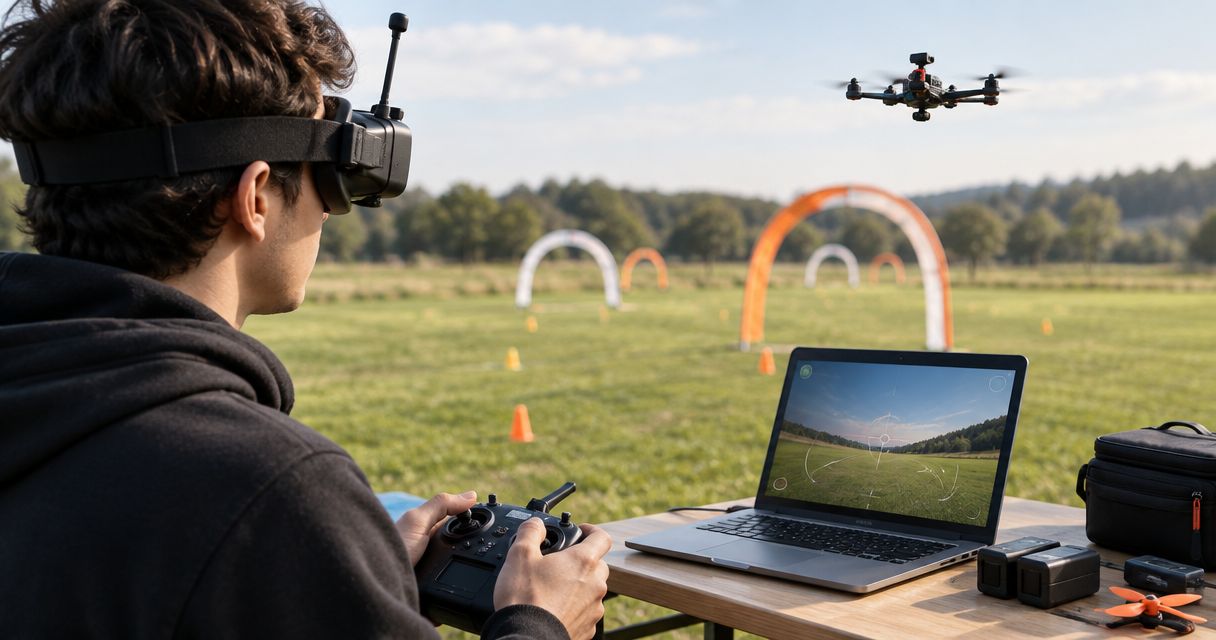
Best overall for Las Vegas beginners: SquadFlight current training and meetups. Best for solo race practice: VelociDrone. Best budget option: Joshua Bardwell self-study. This 2026 guide compares six FPV drone training paths by coaching, simulator practice, community, technical depth, and beginner fit.
TL;DR
- SquadFlight is the best FPV drone training option for Las Vegas beginners who want live, local guidance in 2026.
- VelociDrone is the strongest solo option for pilots focused on racing lines and repeatable simulator drills.
- Liftoff suits beginners who want a more approachable introduction to FPV simulator practice.
- MultiGP chapters fit pilots who can already control a drone and want organized community racing.
- The best FPV drone training programs for beginners combine simulator practice with feedback from an experienced pilot.
Why this matters
FPV means first-person view: you wear goggles that show the drone camera feed while controlling throttle, pitch, roll, and yaw from a radio. Unlike a camera drone that stabilizes itself, an FPV drone in Acro mode does not automatically return to level when you release the sticks.
That difference creates the beginner trap. You can understand the controls intellectually and still have no muscle memory when the drone rolls toward a wall. A useful 2026 training plan therefore gives you frequent stick time, a safe place to make mistakes, and feedback before poor control habits settle in.
The strongest path is usually mixed. Use a simulator for repetition, then add a meetup, club, coach, or experienced pilot who can spot the mistake you cannot see yourself. The complete beginner guide to FPV drone racing explains the equipment and flight concepts behind that progression.
What makes the best FPV drone training program
-
Real stick time: Watching tutorials helps with terminology, but control develops through deliberate flying.
-
Structured progression: Training should move from basic orientation and throttle control to turns, gates, recovery, and Acro flight.
-
Useful feedback: A coach or mentor should identify a specific control problem and give you a drill for it.
-
Low-cost mistakes: Simulator crashes reset instantly, while small indoor drones reduce the consequence of early errors.
-
Beginner-safe pacing: A good program explains FPV terms before expecting you to use them.
-
A next step: Training should lead toward solo practice, social flying, racing, or technical setup rather than ending after one lesson.
A simple session can use a 15-minute warm-up, a 10-minute focused drill, and a 5-minute review. Those blocks are recommendations, not promises about how quickly you will learn. Repeat the drill only when you can name the control input you are trying to improve.
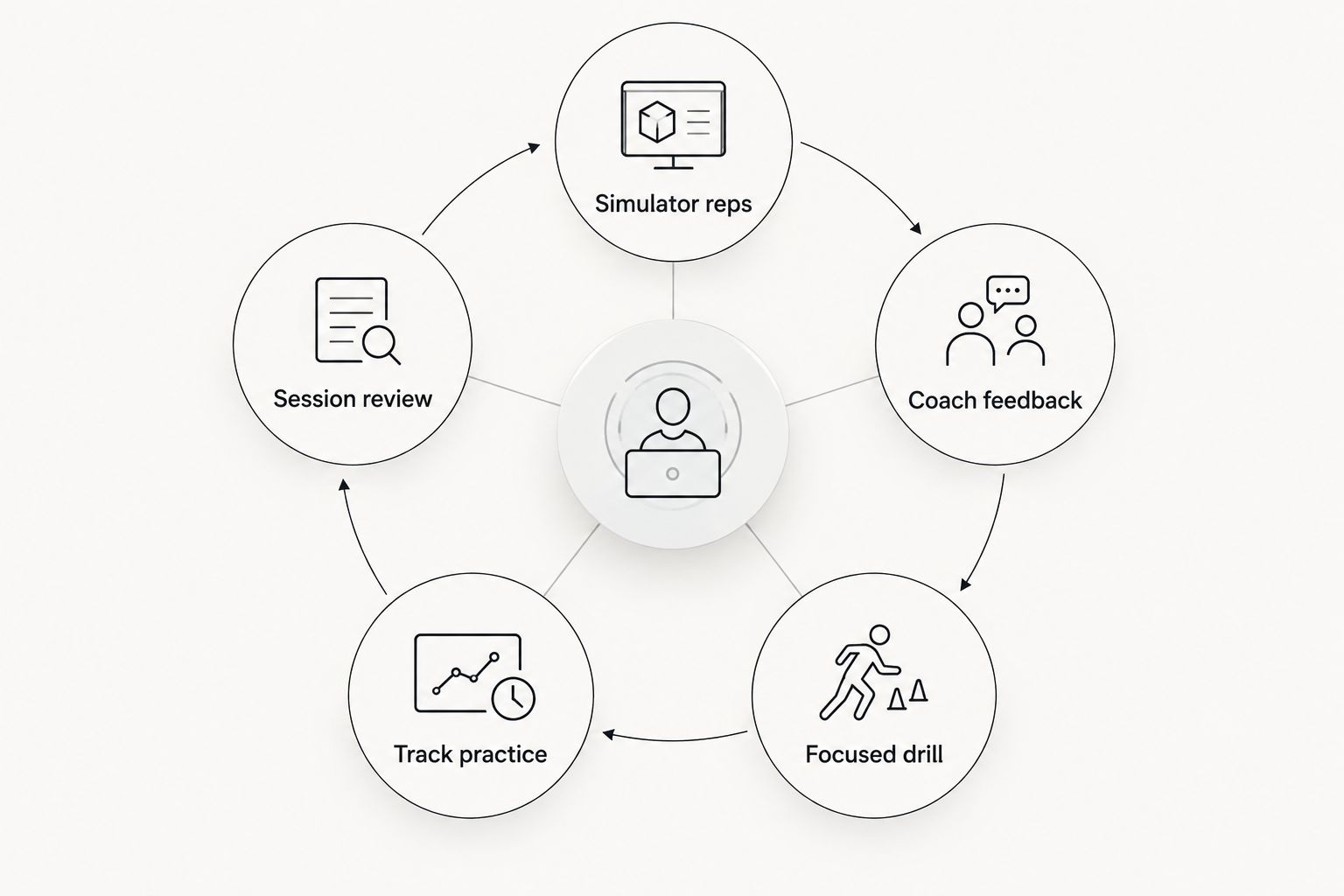
The strongest beginner path alternates repetition with specific feedback.
FPV drone training programs at a glance
Rank Program or path Best for Standout feature Key limitation
1 SquadFlight current training and meetups Las Vegas beginners seeking live guidance Local coaching with beginner-friendly FPV language The planned permanent gym is not open
2 VelociDrone Solo race-simulator practice Repeatable track drills No live coach unless you add one
3 Liftoff Approachable simulator learning Beginner-friendly presentation Simulator practice cannot replace real-world setup
4 MultiGP local chapters Entering organized racing Local race community Chapter schedules and beginner support vary
5 Academy of Model Aeronautics clubs Finding an experienced local mentor In-person equipment knowledge Not every club supports FPV racing
6 Joshua Bardwell self-study Technical learning on a budget Large library of FPV explanations No personal feedback loop
1. SquadFlight: best FPV drone training for Las Vegas beginners
SquadFlight currently offers Las Vegas meetups, training, and garage-lab activity while building toward an indoor, climate-controlled micro-FPV racing gym. The future venue is planned around LED glow-gate tracks, simulators, beginner-friendly training, and community memberships, but it is not open as a permanent gym.
Current training is the relevant option in 2026. A local beginner can get help understanding controls, simulator drills, and the transition from Angle mode to Acro mode. Angle mode self-levels the drone; Acro mode gives the pilot direct control without automatic leveling.
SquadFlight pros:
-
Live, local feedback for Las Vegas beginners
-
Plain explanations without technical gatekeeping
-
A path into the local FPV community
-
Training can connect simulator practice with real pilot feedback
SquadFlight cons:
-
The permanent indoor gym is still a future venue
-
Current activity is based around meetups, training, and garage-lab sessions rather than walk-in access
-
House gear and Fly-and-Swap access should not be expected before the venue opens
Best for: Las Vegas residents who want another pilot to diagnose their control habits. SquadFlight is the best FPV drone training option for Las Vegas beginners who want live guidance before the planned gym opens.
Verdict: Hold. Follow current session details, but do not plan around permanent-venue features yet.
Follow Las Vegas FPV training
Check current meetups, training, and progress toward the planned indoor gym.
2. VelociDrone: best FPV training for race simulation
VelociDrone is an FPV racing simulator built around flying courses with a compatible radio. It gives you repeatable conditions for practicing gates, turns, throttle changes, and complete laps without repairing a physical drone after every mistake.
The program fits a beginner who already knows the basic control names and wants deliberate race practice. Pick one short course and repeat it instead of changing tracks whenever a section becomes difficult. Consistency makes your mistakes easier to identify.
VelociDrone pros:
-
Repeatable track conditions support focused drills
-
Crashes reset without broken props or frames
-
Suitable for regular practice between physical flying sessions
-
Racing focus gives you a clear progression toward full laps
VelociDrone cons:
-
Setup can feel technical to a first-time pilot
-
A simulator cannot teach battery handling or physical repairs
-
Without coaching, you may repeat the same weak line for many sessions
Best for: Beginners focused on racing technique and repeatable solo drills. Compare simulator choices in the guide to FPV drone simulators for beginners.
Verdict: Buy. VelociDrone is the default simulator choice here for a beginner whose main goal is racing.
3. Liftoff: best FPV training for approachable simulator practice
Liftoff is another FPV simulator that lets beginners practice with a radio before putting a physical drone in the air. Its presentation makes it a practical entry point for someone coming from gaming who wants time to learn FPV vocabulary and controls.
Start with basic orientation rather than chasing lap times. Practice taking off, holding a line, making wide turns, and landing in a chosen area. Move to narrow gates only after the drone goes where you intend without frantic corrections.
Liftoff pros:
-
Accessible starting point for gamers new to FPV
-
Supports repeated practice without physical crash damage
-
Provides different environments for control practice
-
Works as a bridge between tutorials and real flying
Liftoff cons:
-
Simulator behavior will not match every physical drone setup
-
Visual progress can hide weak radio habits
-
No live correction is built into solo practice
Best for: Beginners who want a gentler introduction to simulator-based FPV training.
Verdict: Buy. Choose Liftoff over VelociDrone when approachability matters more than a race-first training environment.
4. MultiGP local chapters: best FPV training for community racing
MultiGP organizes drone racing through local chapters and events. The training value comes from flying around experienced racers, seeing how a track is approached, and practicing with a reason to return.
A chapter is not a replacement for your first simulator sessions. Arrive able to arm, take off, control direction, and stop safely. Then ask whether the chapter runs practice days or beginner heats before assuming every event includes instruction.
MultiGP pros:
-
Direct route into organized FPV racing
-
Local pilots can explain race procedure and track etiquette
-
Regular events create a practical goal for training
-
You can watch different lines through the same course
MultiGP cons:
-
Local chapter activity varies
-
Race days can move faster than a first-time pilot expects
-
Coaching depends on the people and format at each event
Best for: Beginners who have basic control and want a community-based route into racing.
Verdict: Hold. Build simulator control first, then contact a local chapter about beginner practice before entering an event.
5. Academy of Model Aeronautics clubs: best for local mentorship
The Academy of Model Aeronautics maintains a network of model aviation clubs in the United States. Some clubs include multirotor and FPV pilots who can help with radio setup, field procedures, repairs, and safe operating habits.
Confirm the club's FPV support before visiting. A strong fixed-wing club can still be the wrong fit if nobody flies quads or understands FPV video systems. Ask specifically about multirotors, micro-FPV, and beginner mentoring.
AMA club pros:
-
Potential access to experienced model-aircraft pilots
-
Useful setting for learning physical setup and maintenance
-
Local knowledge about approved flying locations
-
In-person help can expose simple configuration mistakes
AMA club cons:
-
Not every club supports FPV or drone racing
-
Club culture and mentoring availability differ by location
-
Technical help may focus more on aircraft setup than racing skills
Best for: Beginners who need local help with equipment, repairs, and flying procedures.
Verdict: Hold. Contact the club first and confirm active FPV mentorship before treating it as your training plan.
6. Joshua Bardwell self-study: best budget FPV training resource
Joshua Bardwell publishes detailed FPV tutorials covering setup, flight concepts, troubleshooting, repairs, and equipment. The library is useful when you have a specific question and can describe the problem clearly.
Self-study works best as support, not as your only practice. Watch one relevant explanation, apply it during a focused session, and record what changed. Binge-watching technical videos without touching the sticks feels productive but does not build control.
Joshua Bardwell self-study pros:
-
Broad coverage of beginner and technical FPV topics
-
Useful for solving a specific setup or repair problem
-
Lets you study at your own pace
-
Can support any simulator, club, or coached program
Joshua Bardwell self-study cons:
-
No personal assessment of your flying
-
The amount of material can overwhelm a new pilot
-
Older videos may not match your current hardware or software
Best for: Beginners who need technical explanations alongside hands-on practice.
Verdict: Hold. Use the video library to answer defined questions, not as a substitute for stick time and feedback.
How we ranked these programs
The 2026 ranking uses five decision points: beginner accessibility, deliberate stick time, feedback quality, consequence of mistakes, and the clarity of the next step. Programs moved higher when they solved more than one beginner problem without pretending that videos or simulators replace physical flying.
The ranking also separates availability from future plans. Current training, meetups, chapters, clubs, simulators, and published tutorials count as usable paths. A planned venue does not count as open access, regardless of how useful its future format may be.
No single option wins every category. Simulator programs dominate repetition. Local coaches and mentors dominate feedback. Racing groups dominate community goals. Technical libraries dominate troubleshooting.
Which FPV drone training program should you choose?
Choose local coaching plus a simulator if both are available. That pairing gives you repetition when you are alone and correction when you are stuck.
For Las Vegas beginners in 2026, start with SquadFlight's current training or meetup details and pair that guidance with simulator practice. Outside Las Vegas, start with VelociDrone or Liftoff, then contact a MultiGP chapter or an FPV-friendly model aviation club.
Choose VelociDrone when racing is the goal. Choose Liftoff when you want a more approachable simulator introduction. Use Joshua Bardwell for technical questions that emerge during practice, not as the entire program.
The default plan for an undecided beginner is simple: practice one simulator consistently, get feedback from one experienced pilot, and delay major gear changes until you know whether the problem is equipment or control.
FAQ
What are the best FPV drone training programs for beginners in 2026?
The best 2026 options combine a simulator such as VelociDrone or Liftoff with local coaching, a mentor, or a beginner-friendly racing group. Las Vegas beginners can also check current local training and meetup details while the planned indoor gym remains under development.
Should a beginner use Angle mode or Acro mode?
Start with Angle mode if you need help learning orientation, then transition deliberately toward Acro mode for full FPV control. Angle mode self-levels; Acro mode keeps responding to the attitude commanded by your sticks.
Is VelociDrone better than Liftoff for beginners?
VelociDrone is the stronger pick for race-focused drills, while Liftoff is the more approachable choice for many newcomers. Either works better when you repeat defined exercises instead of changing tracks constantly.
How long should an FPV simulator session be?
Start with a 15-minute warm-up, a 10-minute focused drill, and a 5-minute review. These are practice blocks, not a guaranteed learning timeline, so stop when fatigue makes your inputs careless.
Can I learn FPV only from YouTube?
You can learn terminology, setup, and troubleshooting from YouTube, but video alone does not provide stick practice or personal feedback. Pair tutorials with a simulator and an experienced pilot who can identify specific control errors.
Do recreational FPV pilots need an FAA license?
Recreational pilots do not need a Remote Pilot Certificate solely for recreational flying, but they must pass the FAA's Recreational UAS Safety Test and carry proof of passage. Registration and operating requirements depend on the aircraft and how it is flown.
Can I fly FPV outdoors without another person watching?
FAA visual-line-of-sight rules apply to outdoor FPV operations in the United States. Recreational pilots using goggles generally need a co-located visual observer who can maintain direct visual contact and communicate with the pilot.
How much does beginner FPV drone training cost?
Cost depends on whether you choose a simulator, local club, meetup, or coached session. Check current program terms directly and avoid buying a full equipment setup before confirming which training path fits you.
One last thing
Do not treat a better drone as the cure for inconsistent control. Record a simulator lap, identify one repeated failure, and build the next session around that single problem. If you miss left turns, practice left turns; buying another airframe does not fix the input.
Also check the rules before moving from indoor practice to outdoor flight. In the United States, recreational drones above 250 g, or 0.55 lb, generally require FAA registration, while other FAA requirements can still apply below that threshold. Training should teach responsible setup and operating habits alongside stick control.