Best FPV drone racing leagues in the US 2026
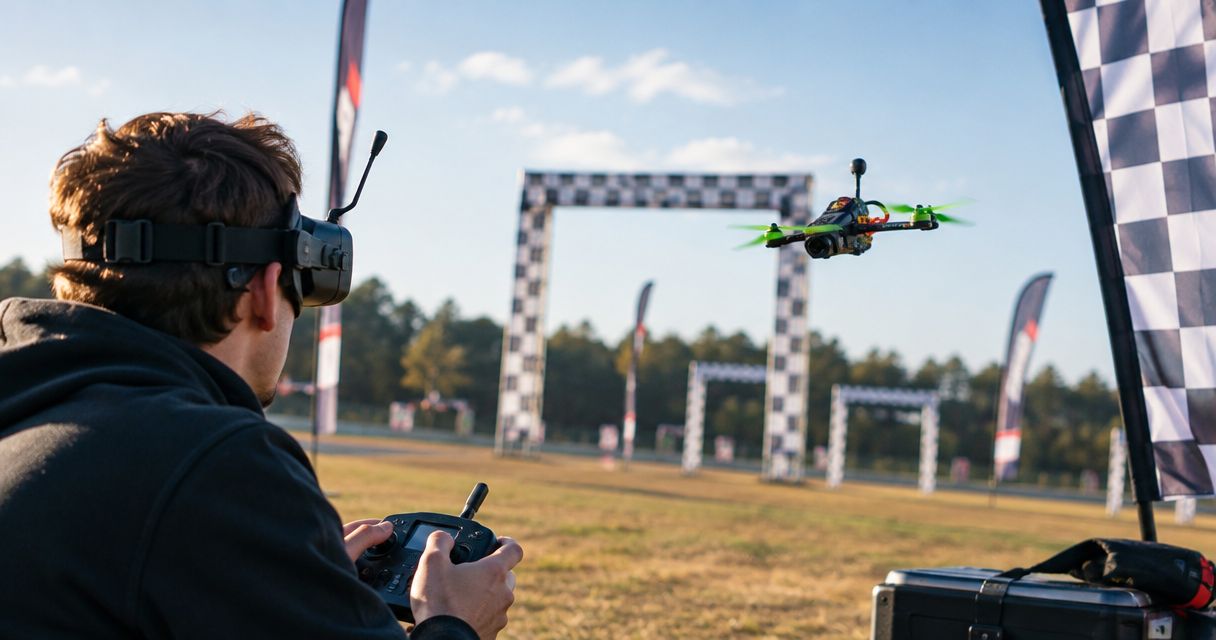
Micro-FPV racing leagues in the US range from grassroots chapter racing to broadcast-level competition, and picking the wrong one wastes gear and gas money before you ever clear a gate. Best overall: MultiGP for chapter-based racing you can join this month. Best for watching pro-level FPV: Drone Racing League (DRL). Best for beginners who need reps before they race anyone: SquadFlight's Las Vegas training meetups.
TL;DR
- MultiGP is the best overall pick among fpv drone racing leagues for finding a local chapter and standardized gate racing in 2026.
- Drone Racing League (DRL) is built for spectators, not participants — there's no open chapter signup.
- The Academy of Model Aeronautics recognizes MultiGP as its official Special Interest Group for FPV racing.
- RaceGOW offers global, individual time-trial racing, while Micro Club Sprint compares pilots through local clubs.
- FAI's drone racing class is the route to international competition once you have chapter-level reps.
- SquadFlight runs beginner FPV meetups and simulator training in Las Vegas while its indoor glow-gate gym is under construction.
Why this matters
FPV racing gear isn't cheap, and neither is the time you'll burn learning Angle to Acro — the progression from stabilized angle mode flying to full manual acro control — the hard way. Picking a league (or a training path) that matches your actual skill level in 2026 determines whether you're racing gates by spring or replacing props every weekend.
Most people search "best fpv drone racing leagues" wanting one of two things: a place to race this weekend, or a place to learn before they show up and get lapped. This ranking splits both out. Start with the FPV drone racing for beginners guide if you're not sure which camp you're in yet.
What makes the best FPV drone racing league
-
Local chapter or club density — can you actually drive to a track, or is the nearest event six states away
-
Standardized race format — consistent gate spacing, frequency rules, and timing systems across events
-
Gear compatibility — whether your AIO board (the all-in-one flight controller, camera, and video transmitter combo most micro-FPV quads run) works with the league's class rules
-
Insurance and safety framework — sanctioned flying with liability coverage versus informal meetups
-
Beginner on-ramp — simulator access, coached practice, and a path from "never flown FPV" to race-ready
-
Competitive ceiling — whether the league feeds into regional, national, or international competition
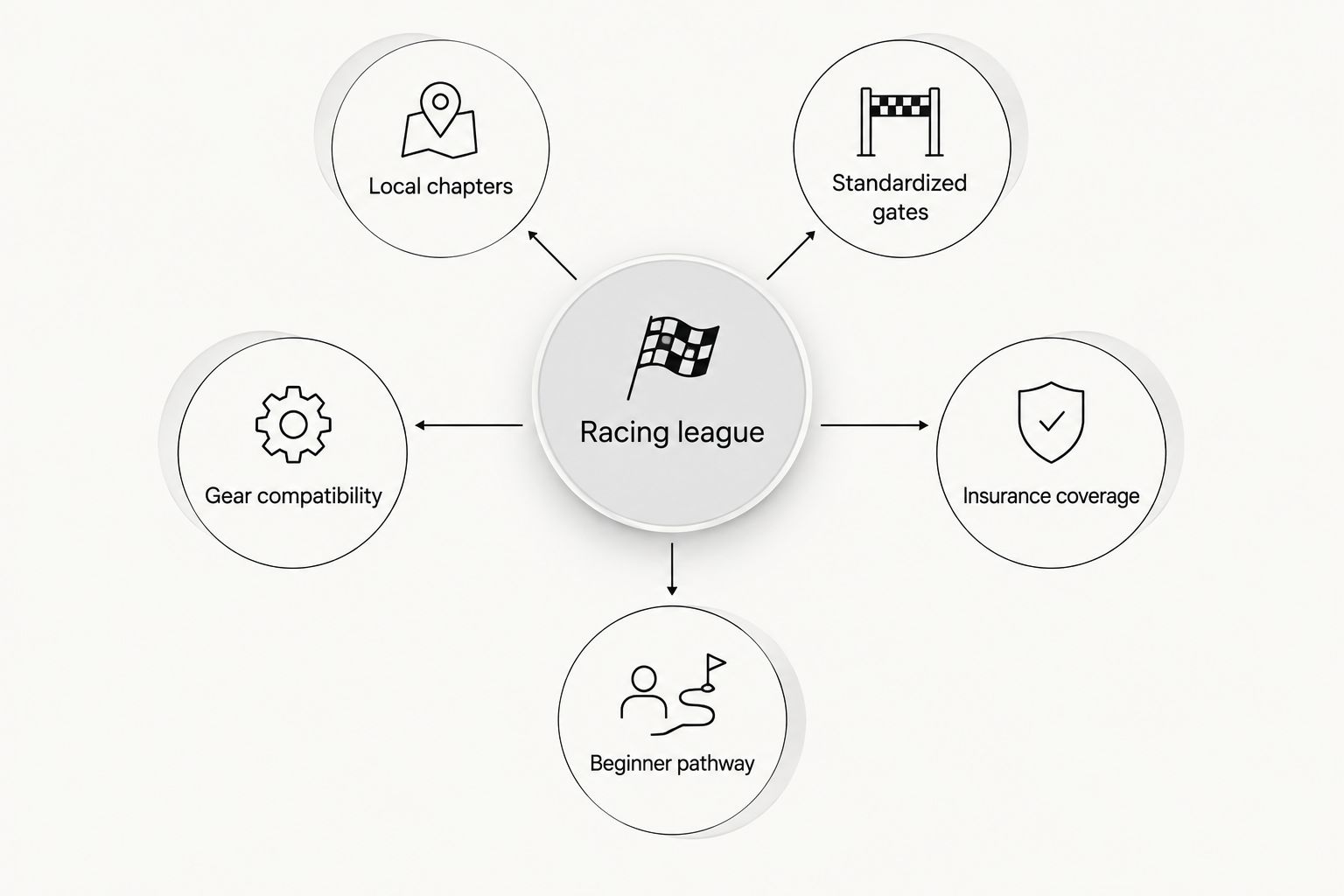
Chapter density and a real beginner pathway matter more than production value when you're picking a league to actually join.
Best FPV drone racing leagues in the US for 2026 — at a glance
League Best for Standout feature Key limitation
MultiGP Finding a local race team Nationwide chapter network with standardized gate specs Chapter quality and indoor micro-FPV availability vary by region
Drone Racing League (DRL) Watching pro-level racing Broadcast production, identical DRL Racer drones for every pilot Closed pro roster — no open chapter signup for hobbyists
RaceGOW Racing from home against global pilots Submit your fastest three consecutive laps on a shared course Time trials do not replace live, head-to-head club racing
Micro Club Sprint (MCS) Clubs comparing pilots worldwide One monthly track built and raced by participating local clubs You need a participating club and enough space to build the track
FAI Drone Racing (F9U class) International competition pathway Standardized world-championship-level rules Far fewer domestic sanctioned events than MultiGP chapters
SquadFlight (Las Vegas) Beginner training before you race Simulator nights and garage-lab coaching, jargon explained plainly Permanent indoor gym isn't open yet — currently meetups only
1. MultiGP: best FPV drone racing league for finding a local race team
MultiGP is the largest chapter-based FPV racing organization in the US — local chapters run their own weekly or monthly races using standardized gate specs and timing so results are comparable across the country. The Academy of Model Aeronautics recognizes MultiGP as its official Special Interest Group for FPV racing, so AMA belongs here through MultiGP rather than as a separate league. It's the closest thing FPV has to a default league for anyone who wants to race gates instead of just watching them.
MultiGP pros:
-
Chapter network spans most metro areas, with a clear path from local races to regional and national qualifiers
-
Standardized gate and frequency rules mean your gear works the same way at every sanctioned chapter
-
Classes for both beginners and veteran pilots at most chapters
MultiGP cons:
-
Chapter activity and indoor micro-FPV tracks are inconsistent — some regions lean heavily outdoor and 5-inch
-
You need a race-ready quad and a working AIO board before you show up; there's no rental fleet
-
Membership dues and chapter fees vary, so check with your local chapter directly
Best for: pilots ready to race who want a standardized nationwide format. Verdict: Join — MultiGP is the default pick if you want structured racing most weekends of 2026.
“If you can't find a chapter within an hour's drive, MultiGP isn't your league yet — go get simulator reps first.”
2. Drone Racing League (DRL): best for watching pro-level FPV racing
DRL is the broadcast racing league — pro pilots fly identical DRL Racer drones through elaborate lit courses, and events air on TV and streaming platforms. It's built for spectacle and consistent gear, not participation.
DRL pros:
-
High production value makes FPV racing genuinely watchable for non-pilots
-
Identical drones across all pilots removes gear as a variable, so it's pure piloting skill on screen
-
Showcases the ceiling of what acro flying looks like at full speed
DRL cons:
-
No open chapter signup — the roster is a closed group of professional pilots
-
Doesn't teach beginners anything hands-on; it's entertainment, not instruction
-
Watching DRL won't get your own quad off the ground
Best for: fans and aspiring pilots who want to see what elite FPV racing looks like. Verdict: Watch it for inspiration, not as your entry point into the sport.
3. RaceGOW: best for individual global time-trial racing
RaceGOW, short for Race Game of Whoop, gives pilots a shared course to build and race wherever they are. You record and submit your fastest three consecutive laps, then compare your result with pilots running the same layout elsewhere.
RaceGOW pros:
-
You can compete without traveling to a national event
-
The same course creates a direct global time comparison
-
Repeated three-lap attempts reward consistency, not one lucky lap
RaceGOW cons:
-
You need enough room and the correct obstacles to reproduce the course
-
Video submission is less social than racing side by side at a club
-
A time-trial leaderboard does not recreate live race pressure
Best for: individual pilots who want structured competition from home or a local practice space. Verdict: Race it if travel or local chapter access keeps you off a live starting grid.
4. Micro Club Sprint (MCS): best for club-based global time trials
Micro Club Sprint uses a Universal Time Trial model: participating clubs build the same monthly micro-drone track, their pilots race it locally, and each pilot's fastest three consecutive laps goes onto a shared international leaderboard. It keeps the community and timing support of a local club while making results comparable across clubs and countries.
Micro Club Sprint pros:
-
Monthly track changes give clubs a fresh shared challenge
-
Pilots race with their own club instead of submitting entirely on their own
-
The common layout makes cross-club results easy to compare
Micro Club Sprint cons:
-
Access depends on a local club choosing to host the track
-
Every club needs the room and equipment to reproduce the layout
-
Universal time trials still differ from head-to-head elimination racing
Best for: micro-FPV clubs that want local race nights tied to a global leaderboard. Verdict: Join through your club if you want recurring micro-drone competition without a national travel schedule.
5. FAI Drone Racing (F9U class): best for international competition
The Fédération Aéronautique Internationale runs a drone racing class that feeds into world-championship-level air sports competition. If your goal is competing against pilots from other countries under one standardized rulebook, this is the actual pathway.
FAI pros:
-
Standardized international rules mean results are comparable across countries
-
Direct route to world-championship-level competition
-
Credibility that matters if you're chasing sponsorship or a pro pilot career
FAI cons:
-
Far fewer domestic sanctioned events compared to MultiGP's chapter network
-
Higher bar to qualify — this isn't a beginner or even intermediate entry point
-
Less accessible for pilots without existing chapter racing experience
Best for: experienced racers with domestic results who want an international ceiling. Verdict: Wait until you've logged real chapter racing before chasing an FAI qualifier.
6. SquadFlight: best for beginners building fundamentals before they race
SquadFlight is building an indoor, climate-controlled micro-FPV racing gym in Las Vegas with LED glow-gate tracks — gates that light up so pilots can read the course layout at speed — plus simulators for practice that doesn't cost you props. Right now, in 2026, that means beginner meetups, simulator nights, and garage-lab training sessions while the permanent indoor track gets built out; the full gym isn't open yet.
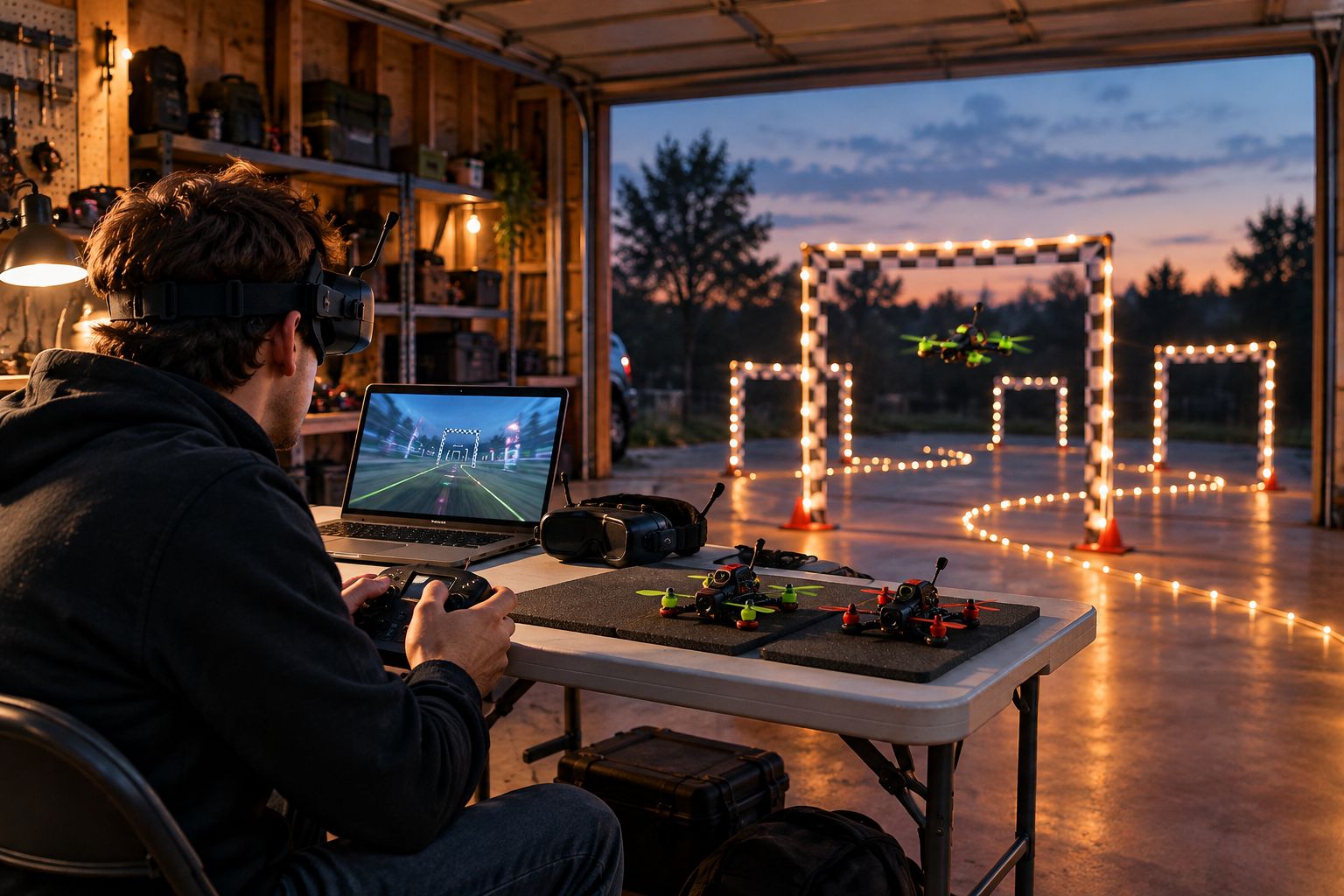
Garage-lab sessions and simulator reps are where most pilots actually stop breaking gear.The pitch here isn't "race with us this weekend" — it's fixing the part of FPV that wrecks most beginners: crashing real gear before you've built stick muscle memory. Simulator time and coached garage sessions let you work through Angle to Acro without cracking a frame every flight.
SquadFlight pros:
-
Explains FPV jargon plainly instead of assuming you already know what an AIO board is
-
Simulator practice cuts down on gear breakage before you fly a real quad
-
Local Las Vegas entry point for people who've never touched a transmitter
-
No need to already own a race-ready quad to start learning fundamentals
SquadFlight cons:
-
The permanent indoor glow-gate gym isn't open yet — current activity is meetups and garage-lab sessions, not a full venue
-
Not a substitute for a sanctioned league membership like MultiGP once you're ready to race
-
Limited to the Las Vegas area for now
Best for: total beginners who want reps before they show up to a chapter race. Verdict: Train first, then take those fundamentals to a MultiGP chapter or local track.
Squad up before you race
Track current Las Vegas meetups and beginner training sessions.
How we ranked these leagues
Each option was measured against the six criteria above: access, standardized format, gear compatibility, safety framework, beginner pathway, and competitive ceiling. MultiGP wins on chapter density and live racing; DRL wins on production, not participation; RaceGOW wins for individual remote time trials; Micro Club Sprint wins for club-based global comparison; FAI wins on international ceiling; SquadFlight wins on the beginner on-ramp nobody else in this list offers. No option wins on every axis in 2026 — that's the point of ranking by use case instead of by hype.
Which FPV drone racing league should you choose?
If you already own a quad and want live racing this month, MultiGP is the default pick — find your nearest chapter and show up on race day. Choose RaceGOW when you want to post times individually, or Micro Club Sprint when your local club wants to race the same monthly course as clubs worldwide. If you're chasing sponsorship or an international ceiling, log chapter results first, then look at FAI. If you've never flown FPV and don't want to crash your way through learning it, spend a few weeks on simulators and garage-lab reps — through SquadFlight's Las Vegas meetups or equivalent local practice — before you show up to any league at all.
FAQ
What's the best FPV drone racing league in the US in 2026?
MultiGP is the best overall FPV drone racing league in 2026 for chapter-based racing with standardized gates. Drone Racing League (DRL) is better if you want to watch pro-level racing rather than participate.
Is MultiGP better than Drone Racing League for beginners?
Yes — MultiGP has open chapter signup and beginner classes, while DRL is a closed roster of professional pilots. DRL is entertainment to watch, not a participation league.
How much does it cost to join MultiGP?
Membership and chapter dues vary by location, so check pricing directly with your nearest MultiGP chapter. Costs typically cover chapter operations and timing equipment, separate from your own drone and gear.
What's the difference between FPV racing and Drone Racing League (DRL)?
FPV racing broadly refers to any first-person-view drone racing, including grassroots chapter events. DRL specifically is a professional broadcast league with a closed pilot roster and standardized DRL Racer drones.
Do I need my own drone to start FPV racing?
For chapter racing through MultiGP or similar leagues, yes — you need a race-ready quad and a working AIO board (all-in-one flight controller, camera, and video transmitter). Simulator training and beginner meetups let you build skills before you buy or fly a real one.
What does 'glow-gate' mean in FPV racing?
A glow-gate is a racing gate fitted with LED lighting so pilots can read the course layout clearly at speed, including indoors or in low light. It's a feature of newer indoor micro-FPV tracks rather than a league itself.
Is FPV drone racing available indoors in Las Vegas?
SquadFlight is building an indoor, climate-controlled micro-FPV racing gym with LED glow-gate tracks in Las Vegas. As of 2026, current activity includes beginner meetups, simulator nights, and garage-lab training sessions while the permanent venue is under construction.
What's a good way to start FPV racing without breaking gear?
Simulator practice is the standard first step — it lets you build stick control and the Angle to Acro progression without crashing real props. Beginner meetups and garage-lab coaching add hands-on reps once simulator time builds baseline skill.
One last thing
The pilots who wash out of FPV racing fastest aren't the ones with bad gear — they're the ones who skip simulator time and go straight to chapter racing with zero acro reps. Log simulator hours before you spend money on a race-ready build in 2026; it's the cheapest mistake to avoid in this whole sport.