Best drone racing gates and track equipment 2026
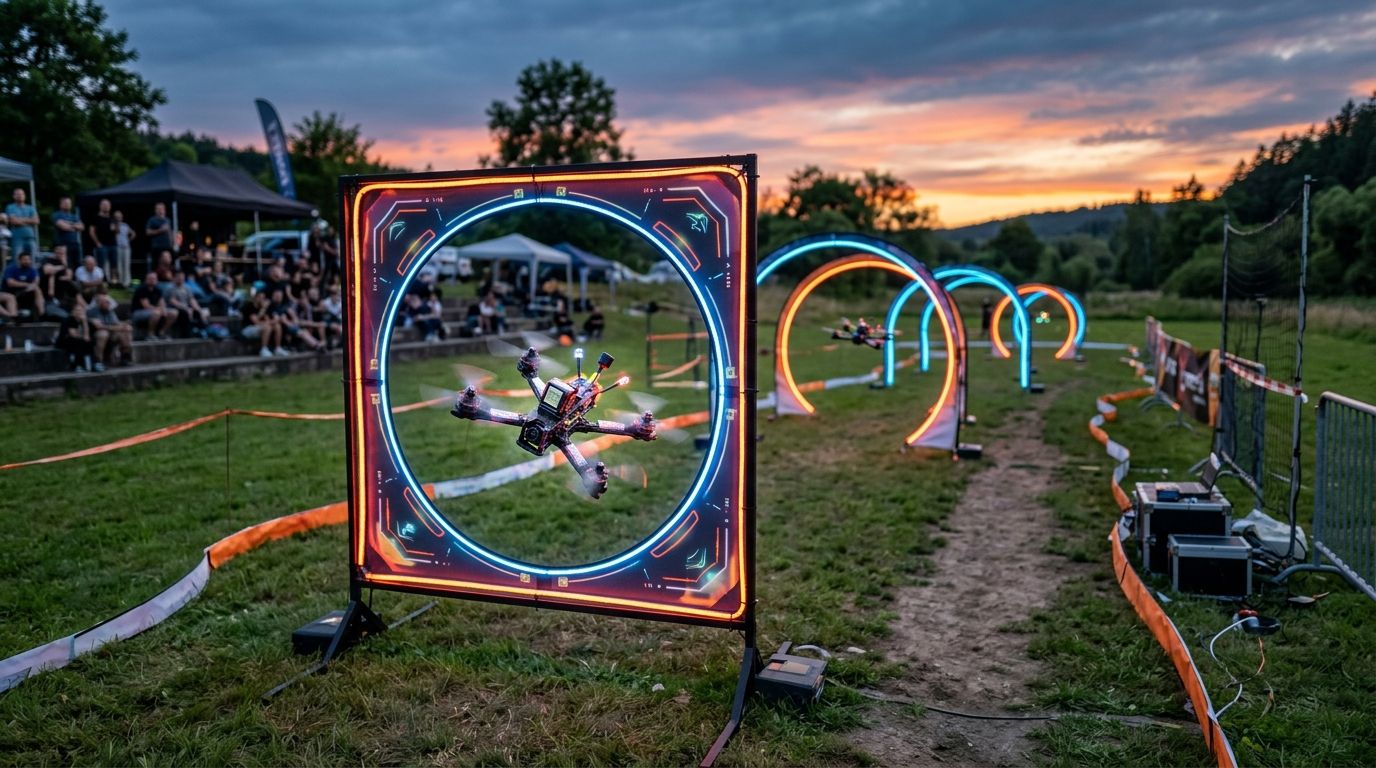
You want a track that actually teaches you gates instead of a pile of hoops that fall over every time a 3-inch quad clips one. Best overall for most home and garage setups: LED glow-gates. Best for someone just starting to build a gate sequence: foldable fabric pop-up gates. Best budget option to fill out a full course fast: slalom flag and cone kits.
TL;DR
- LED glow-gates are the best drone racing gates and track equipment overall for low-light indoor practice in 2026.
- Foldable fabric pop-up gates cost less to start with and survive beginner crashes without cracking.
- FPV simulators aren't physical gates but belong in any track equipment list because they drill gate timing with zero broken props.
- Lap timing systems turn a backyard or garage loop into a real measurable practice session, not just laps for fun.
Why this matters
Most people getting into FPV drone racing buy a quad, watch a few FPV drone racing for beginners videos, and then hit a wall: there's nowhere to actually fly gates. Open fields work for freestyle, but racing is about repeatable lines through fixed obstacles, and that means you need real gates, not cardboard boxes stacked in a driveway.
The gear below covers what an FPV pilot actually sets up before flying a repeatable course in 2026 — indoors, outdoors, or on a sim while the batteries charge. None of it requires a warehouse. Most of it fits in a garage, and SquadFlight's own garage-lab meetups in Las Vegas run on a version of exactly this setup: glow-gates, a sim rig for warm-ups, and a lap timer to keep score.
What makes the best drone racing gates and track equipment
-
Crash tolerance — a gate a beginner can clip ten times a session without cracking
-
Visibility — can you actually see the gate opening at speed, especially indoors or at dusk
-
Setup and teardown time — does it pack flat or does it need a truck
-
Line consistency — does the gate hold its shape and position between flights, or drift after every hit
-
Scalability — can the same gear go from a 5-gate beginner loop to a full 12-gate race course
Drone racing gates and track equipment at a glance
Equipment Best for Standout feature Key limitation
LED glow-gates Night-vibe indoor tracks LED rings stay visible even at high shutter speeds on FPV cameras Costs more per gate than a plain fabric hoop
Foldable fabric pop-up gates Beginner garage setups Collapses flat, pops open in seconds, bounces instead of shattering No lighting, easy to lose in a dim room
Inflatable arch gates Outdoor backyard tracks Wide opening clears bigger multirotors and cuts prop-strike risk Needs a pump and stakes, not built for tight indoor spans
Slalom flag and cone kits Technical acro reps Cheapest way to lay out a full sequence, repositions in seconds No actual gate to fly through, so it drills lines but not gate commitment
FPV simulators Zero-crash gate practice Unlimited resets with no cracked frames or dead motors Doesn't replicate real wind, prop wash, or a real crash
Lap timing systems Tracking race-day progress Turns any loop into measurable lap splits, not just flying for fun Needs a transponder or RFID tag matched to each quad
1. LED glow-gates: best drone racing gate for night-vibe indoor tracks
Glow-gates are hoops or square frames wrapped in LED strips or lit rings so the opening stays visible even when the room lights are down. That matters more than it sounds — FPV cameras run in low-light modes indoors, and a plain fabric hoop can vanish into the background the second you're moving at 40 mph through a gate.
LED glow-gates pros:
-
Stay visible at speed, even in a dim garage or a converted warehouse bay
-
Give a course a real race-night feel instead of a practice-cone layout
-
Consistent shape and position session after session, since they don't sag or fold
LED glow-gates cons:
-
Priced above basic fabric gates because of the LED hardware
-
Need charging or a power source, one more thing to manage before a session
Best for: pilots building an indoor track meant to be flown after dark or in a windowless space. Verdict: Buy.
2. Foldable fabric pop-up gates: best track equipment for beginner garage setups
These are the spring-loaded hoops that snap flat for storage and pop into a full ring the second you let go. They're the standard entry point into gate flying because they cost less to replace and they bounce instead of cracking when a beginner clips the frame.
Foldable fabric pop-up gates pros:
-
Set up and tear down a full course in minutes
-
Survive direct hits without breaking, which matters when you're still learning gate lines
-
Stack flat, so storage isn't a problem in a garage or spare room
Foldable fabric pop-up gates cons:
-
Hard to see in low light without adding your own lighting
-
Can shift position after a hard hit, so lines drift over a session
Best for: anyone setting up their first gate course who wants something forgiving while they're still learning to commit to a line. Verdict: Buy.
3. Inflatable arch gates: best drone racing gate for outdoor backyard tracks
Inflatable arches are the big, wide gates you see at outdoor race meets — a soft frame that stays upright with a pump and a set of stakes. They clear larger 5-inch racing quads without the tight margin a small indoor hoop demands.
Inflatable arch gates pros:
-
Wide enough to fly through comfortably even with a bigger frame
-
Soft on impact, so a clipped gate doesn't damage the quad or the gate
-
Holds up outdoors, including light wind that would knock over a lighter frame
Inflatable arch gates cons:
-
Needs a pump and stakes every time you set up, more work than a pop-up hoop
-
Bulkier to store and transport than fabric or LED gates
Best for: outdoor backyard or park tracks with bigger racing frames. Verdict: Buy for outdoor use, skip for indoor micro-FPV.
4. Slalom flag and cone kits: best track equipment for technical acro reps
A slalom kit is just flags or cones set on stands to mark a line without a physical gate to fly through. It's the cheapest way to lay out a long, winding sequence, and it's what a lot of pilots use to drill lines before adding real gates to the same layout.
Slalom flag and cone kits pros:
-
Lowest cost way to fill out a full course layout
-
Repositions in seconds, so you can redesign a track between runs
-
Great for drilling tight turns and line precision without gate anxiety
Slalom flag and cone kits cons:
-
No actual opening to fly through, so it doesn't build the commitment reflex a real gate demands
-
Easy to knock over in wind or a crowded space
Best for: pilots drilling line accuracy before they add real gates to the mix. Verdict: Buy as a supplement, not a standalone course.
“A cone shows you the line. A gate makes you commit to it — that's the difference between practicing acro and practicing racing.”
5. FPV simulators: best track equipment for zero-crash gate practice
A simulator isn't a physical gate, but it belongs on this list because it's where most pilots actually learn to read a gate sequence before they risk real gear. Run on a computer with an FPV controller and a headset, a sim lets you fly the same gate pattern fifty times in a row with zero cracked arms.
FPV simulators pros:
-
Unlimited resets with no repair cost between crashes
-
Lets a beginner build muscle memory for gate timing before flying real hardware
-
Works any time, no track setup required
FPV simulators cons:
-
Doesn't replicate real wind, prop wash, or the physical consequence of a crash
-
Different feel from a real quad depending on the controller and settings
Best for: anyone who wants gate reps without burning through props and motors. See the full breakdown in FPV drone simulators for beginners. Verdict: Buy, and pair it with real-gate reps once you're comfortable.
6. Lap timing systems: best track equipment for tracking race-day progress
A lap timing system uses a transponder on each quad and a receiver near the start-finish gate to log real lap splits. It's what turns a casual home loop into an actual practice tool, because "I felt faster" isn't the same as a lap time that's two seconds quicker than last week.
Lap timing systems pros:
-
Gives you objective proof you're improving, not just a feeling
-
Works with any number of pilots flying the same course
-
Scales from a 3-gate backyard loop to a full competition track
Lap timing systems cons:
-
Needs a transponder matched to every quad on the course
-
Adds a setup step most beginners skip until they're already hooked
Best for: pilots who've moved past casual flying and want to track real progress. Pair this with a structured plan like the ones covered in FPV drone training programs. Verdict: Buy once you're flying gates consistently.
How this list was ranked
Each category was scored against the same five criteria from the section above: crash tolerance, visibility, setup time, line consistency, and scalability. Glow-gates and pop-up gates rank highest because they hit all five without needing extra infrastructure. Inflatable arches and slalom kits win narrower use cases — outdoor space and cheap line-drilling, respectively. Simulators and lap timers round out the list because they're not gates at all, but no serious 2026 track setup skips either one.
Which drone racing gates and track equipment should you choose?
If you're setting up your first course in a garage or spare room, start with foldable fabric pop-up gates — they're forgiving and quick to reposition while you're still learning lines. Once you're flying consistently and want the indoor race-night look, add LED glow-gates. If you're outdoors with more space and bigger frames, inflatable arch gates are the better fit. And regardless of which physical gates you pick, run gate sequences on an FPV simulator first — it's the cheapest gate practice in the hobby, full stop.
Squad up in Las Vegas
See how SquadFlight's current meetups and training sessions run before the gym opens.
FAQ
What are the best drone racing gates for beginners in 2026?
Foldable fabric pop-up gates are the best drone racing gates for beginners in 2026 because they fold flat, set up fast, and bounce off a hit instead of cracking. Add LED glow-gates once you want better visibility in a dim room.
Are LED glow-gates worth it over plain fabric gates?
LED glow-gates are worth it if you fly indoors or in low light, since the lit ring stays visible at speed when a plain fabric hoop can disappear into the background. For daylight outdoor flying, fabric or inflatable gates work fine without the extra cost.
Do I need real gates or can a simulator replace them?
A simulator doesn't replace real gates, but it's the fastest way to drill gate timing before you risk real gear. Most pilots use a sim to build the reflex, then move to physical gates to add real crash consequence and wind.
What's the difference between a slalom kit and a real gate course?
A slalom kit uses flags or cones to mark a line with no opening to fly through, while a real gate course forces you to commit to flying through a fixed frame. Slalom kits are cheaper and good for line drills, but they don't build the same commitment reflex as a gate.
How much space do I need for a home FPV gate track?
A basic 5-gate loop fits in most two-car garages or a cleared living room, especially with micro-FPV quads under 3 inches. Bigger racing frames and inflatable arch gates need more open space, which is why those setups usually move outdoors.
Do I need a lap timing system to practice racing?
No, a lap timing system isn't required to start, but it's the tool that turns casual flying into measurable practice once you're flying gates consistently. Most beginners skip it for the first few weeks and add it once they want real lap-time data.
What track equipment does SquadFlight use at its Las Vegas meetups?
SquadFlight's current garage-lab meetups and training sessions in Las Vegas run on glow-gate style tracks paired with simulator rigs for warm-ups, ahead of the permanent indoor gym opening. This is separate from the future venue, which is still in development.
One last thing
The single most skipped piece of gear on this list is the simulator, and it's the one that saves the most money. A cracked frame or a dead motor from a bad gate approach costs real dollars every time; a sim crash costs nothing but a reset. Run the gate sequence on a sim until it feels boring, then go fly it for real — that's the order that keeps gear intact in 2026.